
10 Guided Selling Examples From Leading Ecommerce Brands
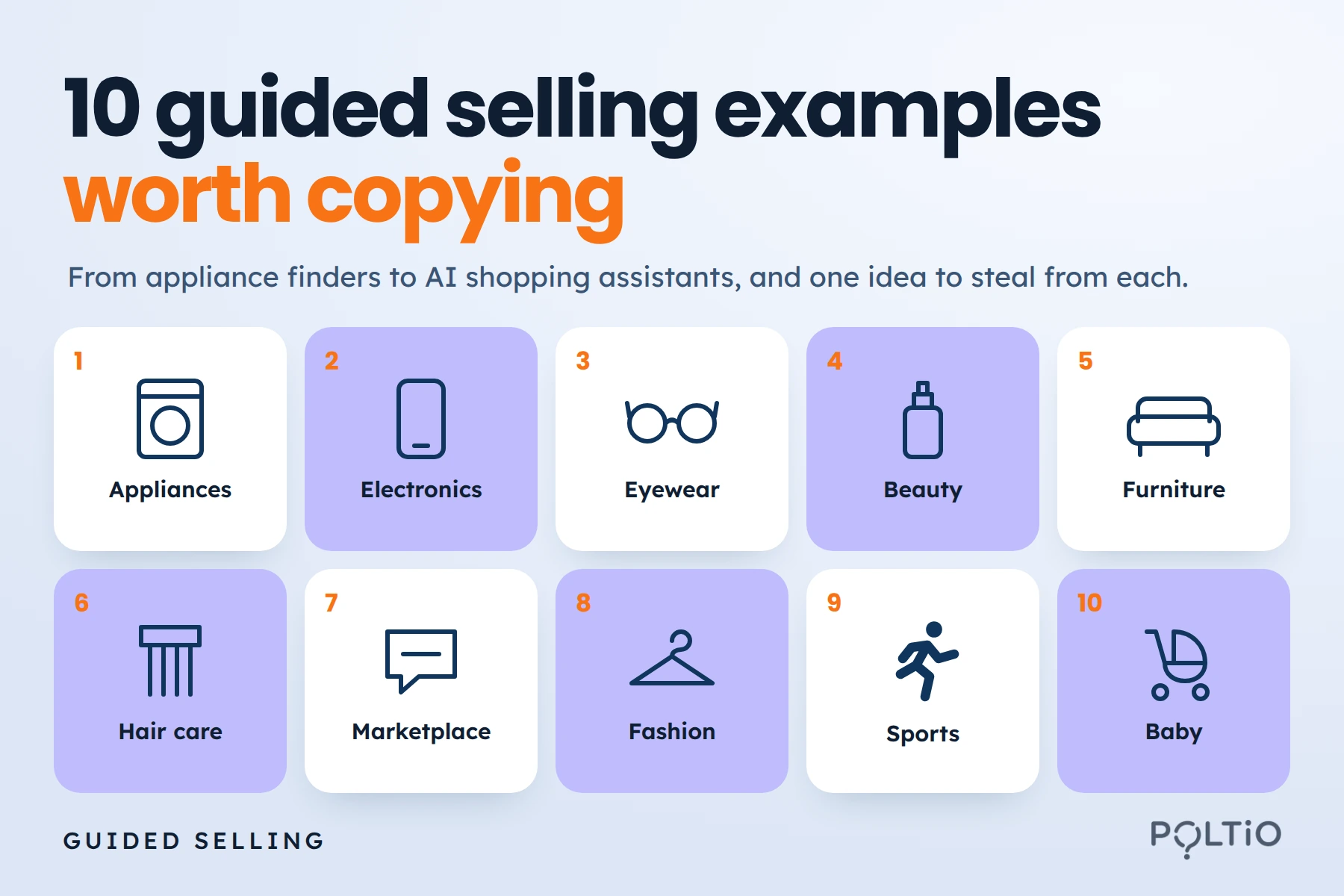
Guided selling is easier to show than to explain. So here are ten brands doing it well, across appliances, electronics, beauty, eyewear, furniture and fashion, and the one idea you can steal from each.
Quick answer: Guided selling examples include appliance and electronics product finders (Arçelik, MediaMarkt), style quizzes (Warby Parker), shade matchers (Sephora), room planners (IKEA), personalized consultations (Prose) and conversational AI shopping assistants (Amazon’s Rufus, Zalando’s assistant). Each asks shoppers about their needs before recommending products.
What makes a strong guided selling example?
We picked examples that meet three criteria:
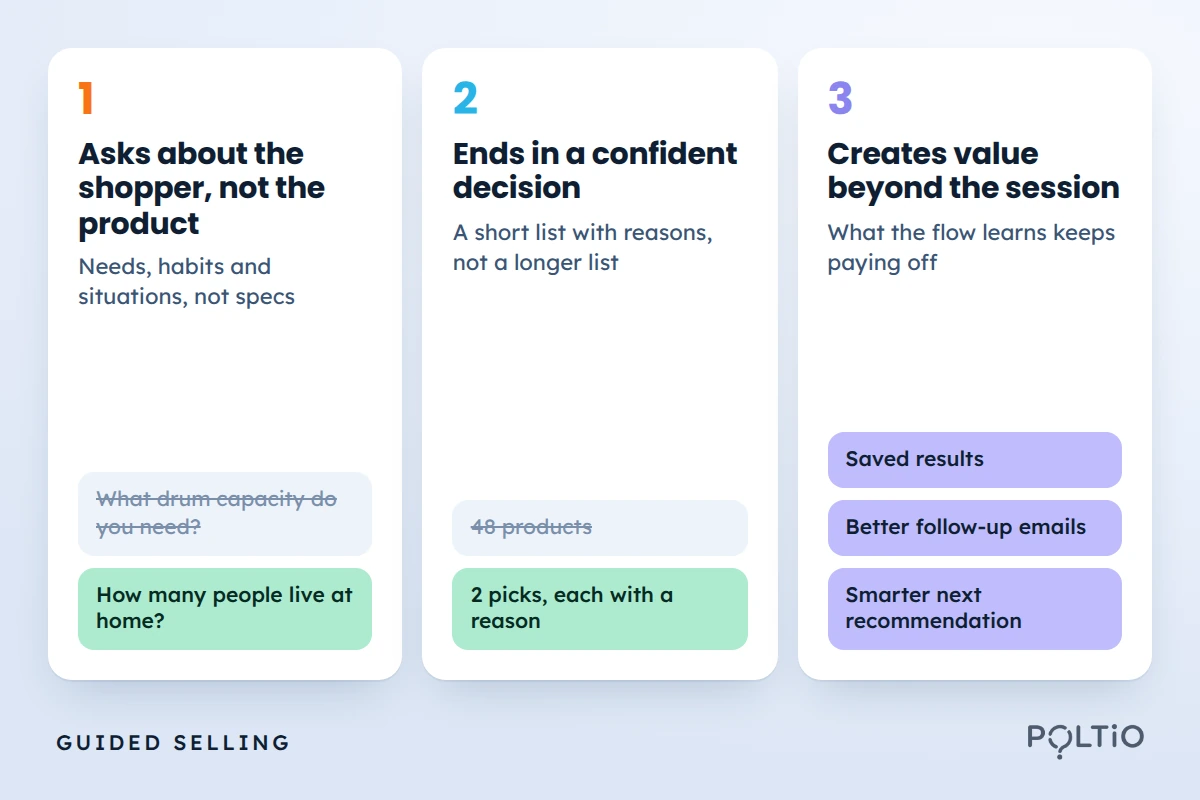
- It asks about the shopper, not the product. Needs, habits and situations, not specs.
- It ends in a confident decision. A short list with reasons, not a longer list.
- It creates value beyond the session. Saved results, better follow-up emails or smarter recommendations next time.
10 guided selling examples
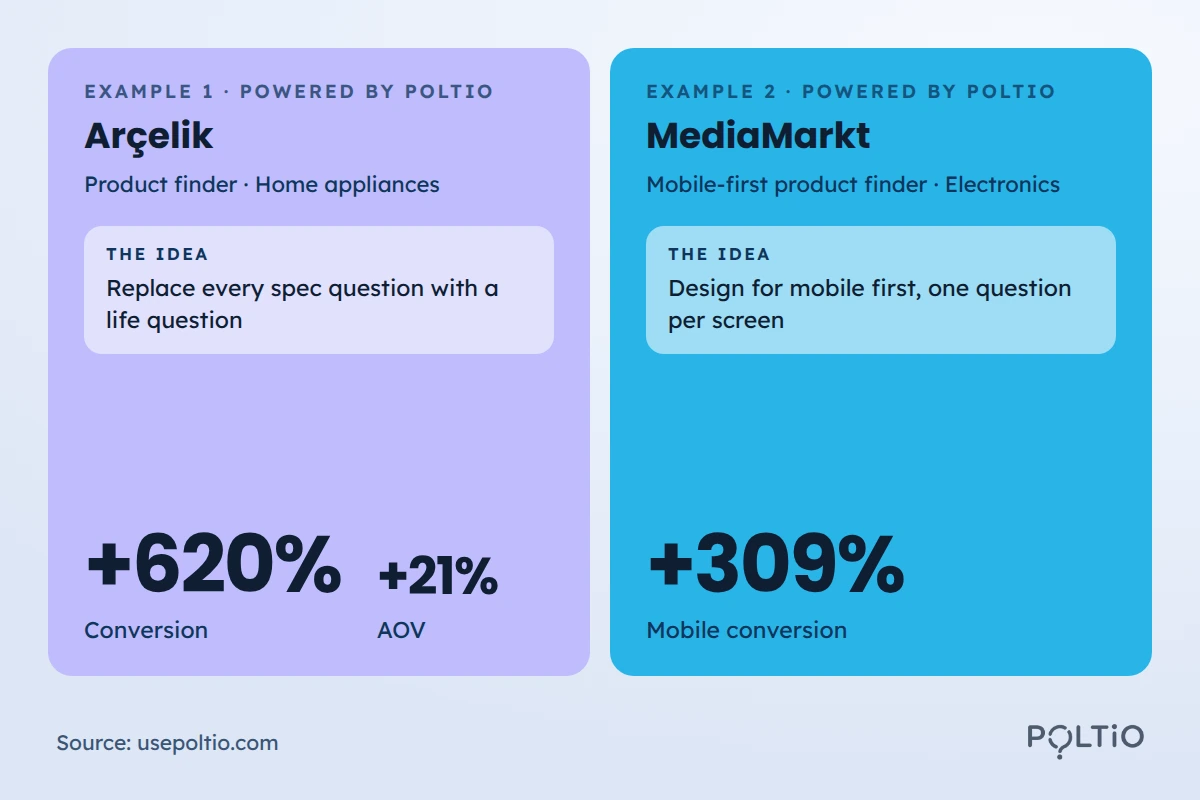
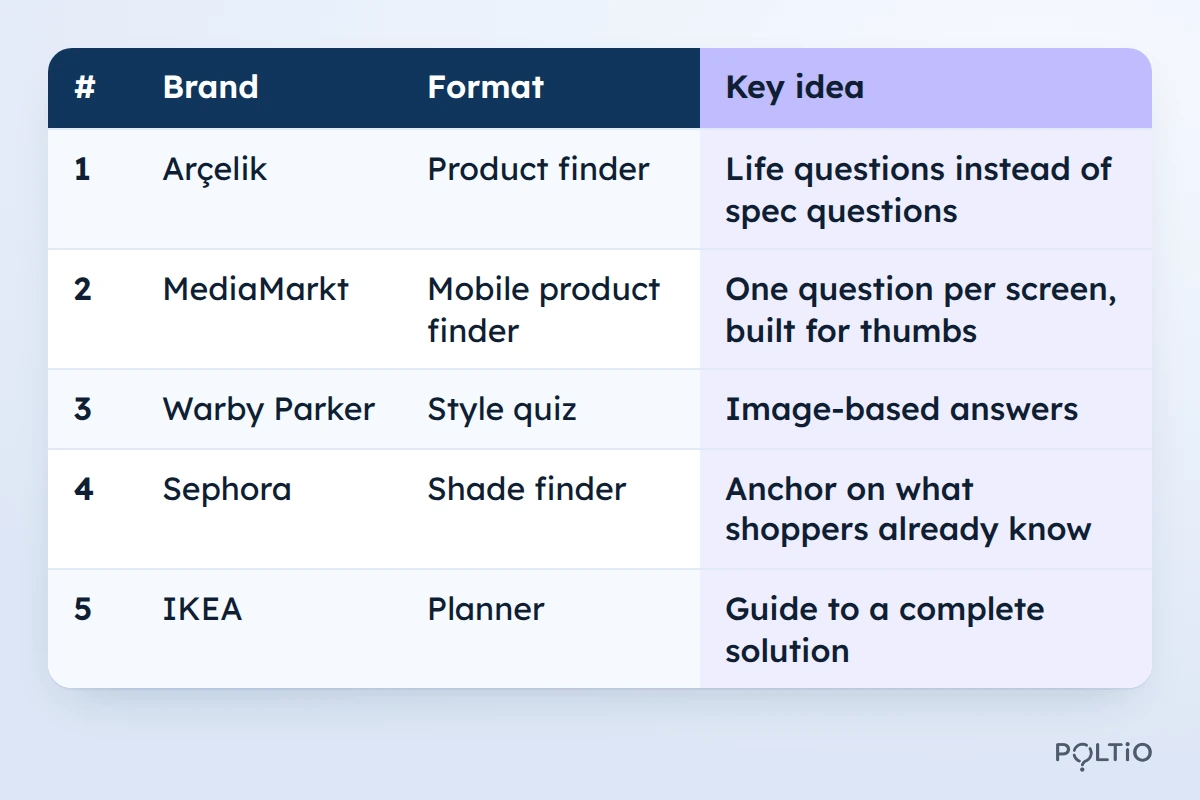
1. Arçelik: the appliance finder that asks about your home
Format: Product finder · Industry: Home appliances · Powered by: Poltio
Most shoppers can’t tell you the drum capacity or energy class they need. They can tell you how many people live at home and where the machine will go. Arçelik’s guided flow asks those questions and maps the answers to the right models.
Result: +620% conversion and +21% average order value (usepoltio.com).
Steal this: Replace every spec question with a life question.
2. MediaMarkt: a finder built for thumbs
Format: Mobile-first product finder · Industry: Consumer electronics · Powered by: Poltio
Electronics categories are dense with specs, and on a phone, filter menus are painful. A tap-through finder, one question per screen, replaces scrolling through filters.
Result: +309% mobile conversion (usepoltio.com).
Steal this: Design the flow for mobile first, then adapt it for desktop.
3. Warby Parker: the frame quiz
Format: Style quiz · Industry: Eyewear
The quiz asks about face shape, fit preferences and style, then suggests frames. It turns hundreds of options into a personal shortlist.
Steal this: Use image answers for visual decisions.
4. Sephora: shade matching
Format: Shade finder · Industry: Beauty
Foundation is one of the hardest products to buy online. Sephora’s shade-matching tools guide shoppers to a match based on their skin tone, undertone and preferences, often referencing a shade they already know.
Steal this: Anchor on what shoppers already know (“What shade do you wear in brand X?”).
5. IKEA: room and storage planners
Format: Configurator / planner · Industry: Furniture
IKEA’s planning tools guide shoppers through room dimensions, needs and style to build a complete solution, like a wardrobe system or kitchen, rather than choosing single products.
Steal this: For multi-part purchases, guide shoppers to a complete set, not one item.
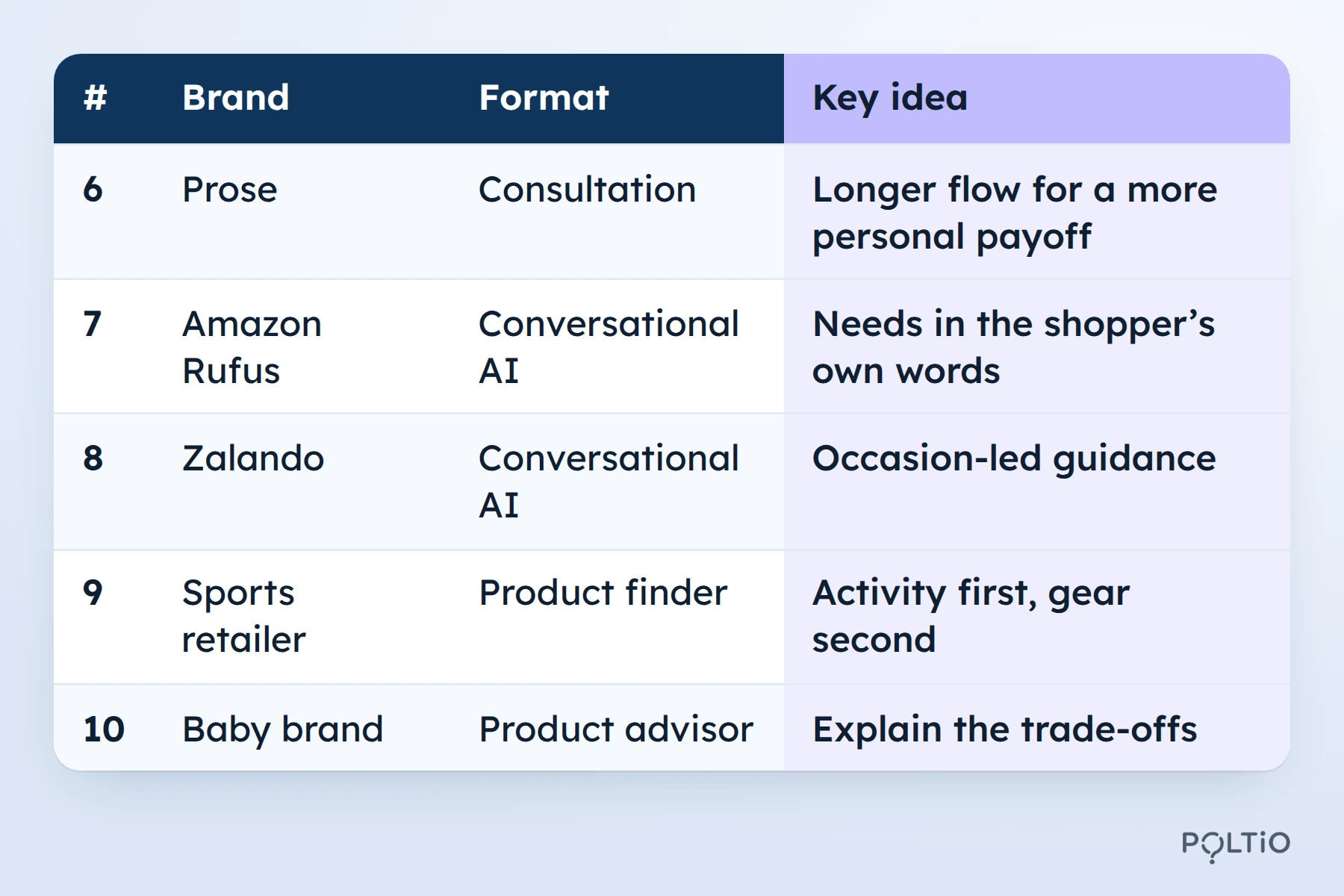
6. Prose: the long consultation that works
Format: Consultation quiz · Industry: Hair care
Prose asks more questions than most quizzes, covering hair type, goals, lifestyle and environment. It works because every answer visibly shapes a custom formula.
Steal this: You can ask more when the payoff is clearly more personal.
7. Amazon Rufus: a conversational shopping assistant
Format: Conversational AI assistant · Industry: Marketplace
Amazon’s Rufus lets shoppers ask questions in plain language, like “what do I need for cold-weather golf?”, and get product suggestions and comparisons in the flow of shopping.
Steal this: Let shoppers describe needs in their own words, then turn that into product guidance.
8. Zalando: an AI fashion assistant
Format: Conversational AI assistant · Industry: Fashion
Zalando’s AI assistant helps shoppers find outfits for occasions and trends using natural-language prompts, such as what to wear to a wedding in a specific city.
Steal this: Anchor guidance on occasions, not categories.
9. Sports retailer: activity-based gear finder
Format: Product finder · Industry: Sports and outdoor
Editor: use a Poltio customer example (e.g., Decathlon) if the flow and permission are confirmed; otherwise use this generic example.
A running shoe or tent finder asks how, where and how often the shopper plays their sport, then maps terrain and frequency to cushioning, grip or weight.
Steal this: Ask about the activity; the gear follows.
10. Baby brand: stroller advisor
Format: Product advisor · Industry: Baby and family
Editor: use a Poltio customer example (e.g., Bugaboo) if the flow and permission are confirmed; otherwise use this generic example.
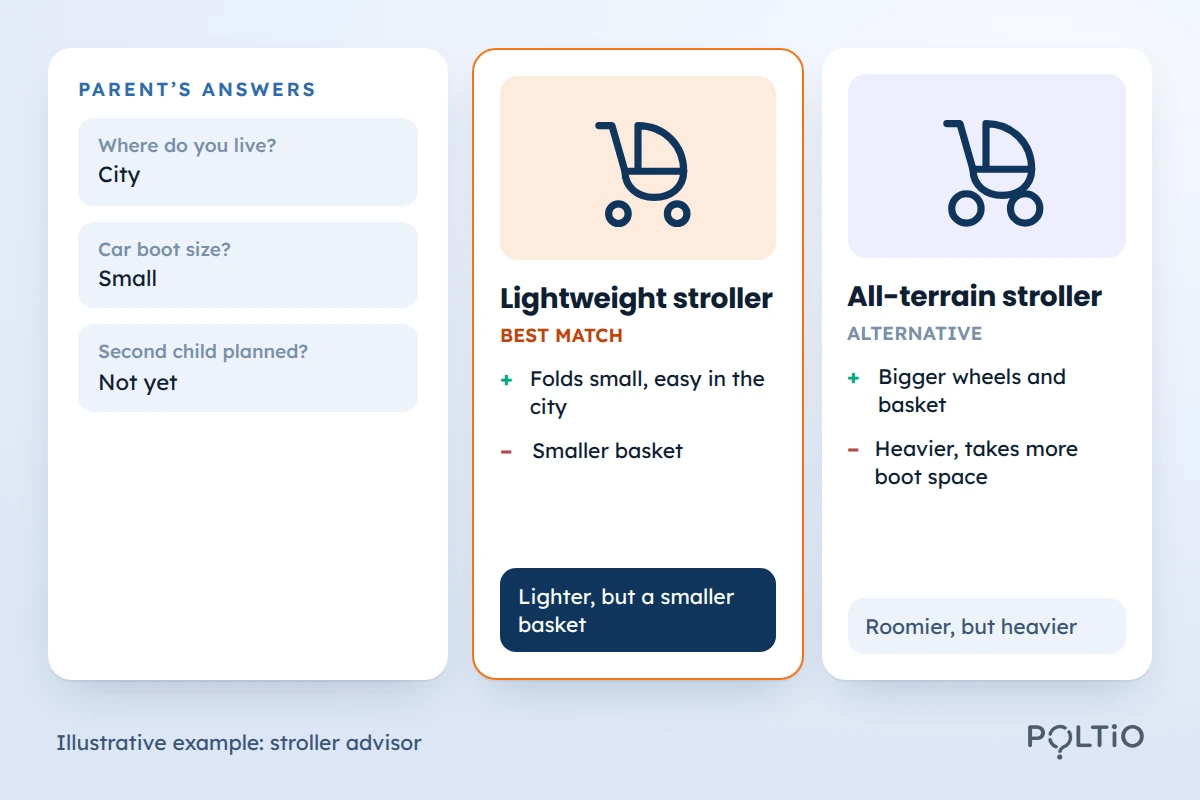
Parents answer questions about city or countryside living, car boot size and plans for a second child. The advisor explains trade-offs between lightweight, all-terrain and convertible strollers.
Steal this: Show trade-offs in the results (“lighter, but a smaller basket”). It builds trust.
Patterns across all 10 examples
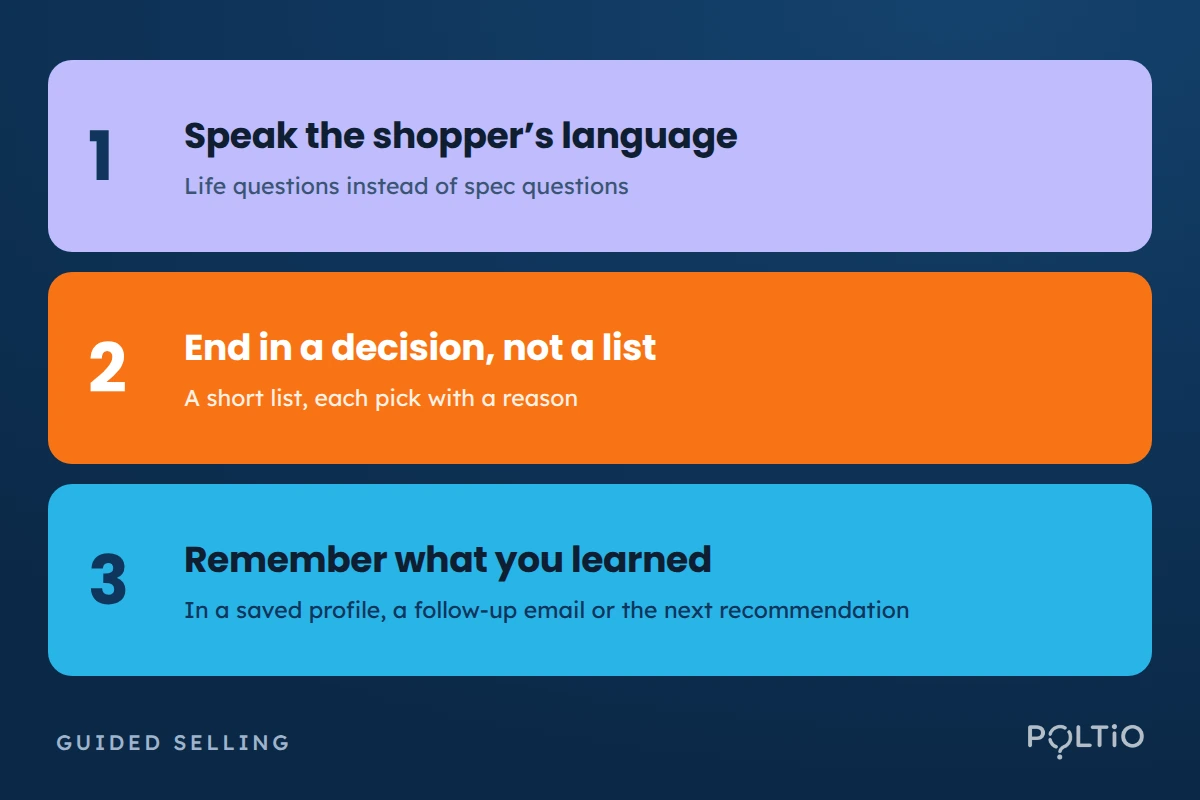
Three lessons stand out. The best flows speak the shopper’s language, end in a decision rather than a list, and remember what they learned, whether in a saved profile, a follow-up email or the next recommendation.
How to build your own guided selling experience
- Pick the category where shoppers struggle most. Look for high bounce rates, many products and frequent “which one?” questions to customer service.
- List the 3–5 decisions that separate your products, then turn each into a question about the shopper’s life.
- Choose the format that fits: product finder for technical products, quiz for personal or playful categories, conversational AI for complex needs.
- Write a reason for every result. “Recommended because…” is what turns a suggestion into a decision.
- Connect the answers to your email platform and CRM so the experience keeps paying off.
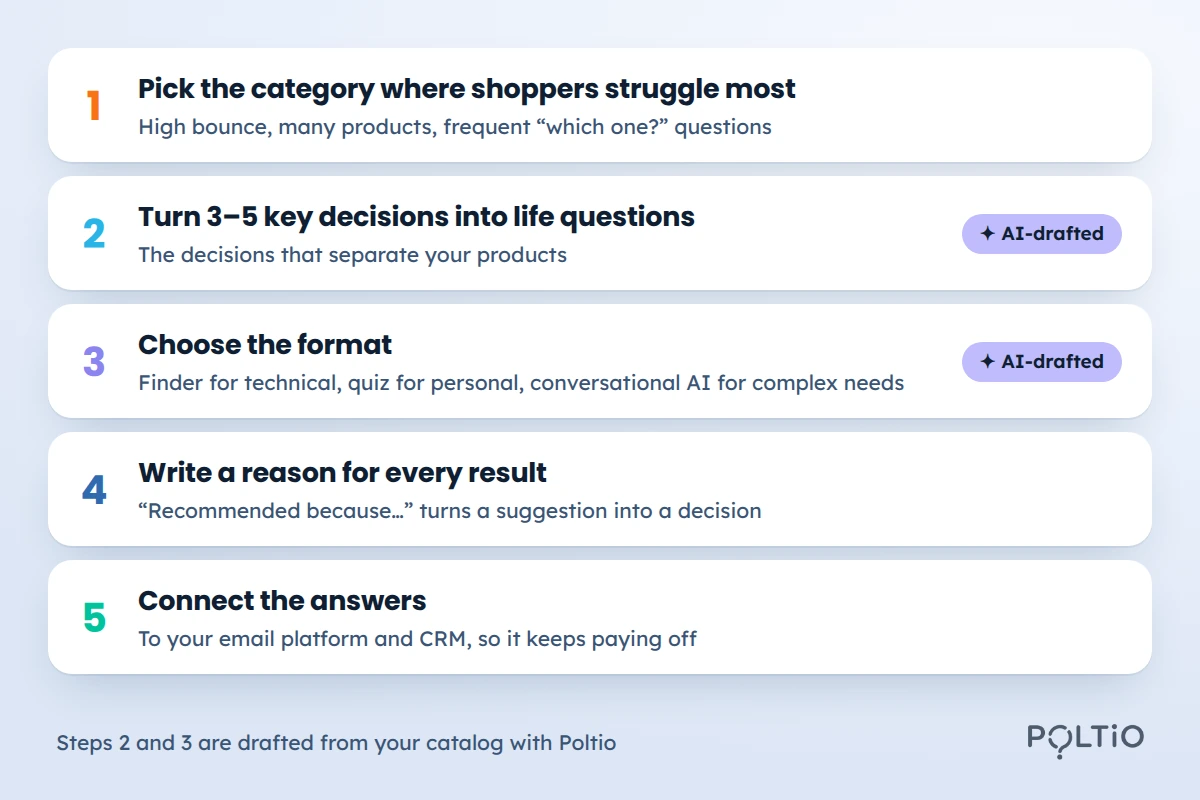
With an AI-led platform like Poltio, steps 2 and 3 are drafted for you from your catalog.
Frequently asked questions
What is an example of guided selling?
An appliance brand’s product finder is a classic example. Instead of filtering by drum capacity, shoppers answer questions like “How many people live in your home?” and receive a recommended washing machine. Arçelik’s guided flow with Poltio lifted conversion by 620%.
What are the main types of guided selling?
Product finders, product recommendation quizzes, product advisors, configurators and planners, bundle builders, gift finders and conversational AI shopping assistants.
Is a chatbot a form of guided selling?
A shopping-focused AI assistant is. A general customer-service chatbot that handles orders and returns is not, unless it helps shoppers choose products.
Which industries use guided selling most?
Consumer electronics, home appliances, beauty, eyewear, furniture, sports, baby products and fashion: categories where choices are technical, personal or expensive.
Want your brand on the next list of great examples? Book a Poltio demo or try the demo store.
Related reading: What Is a Guided Selling Platform? · What Is a Product Recommendation Quiz? · Best Guided Selling Software in 2026