
2027 Guided Commerce Trends: What’s Next for AI Shopping Assistants

Shoppers now ask ChatGPT what to buy before they ever visit your store. That single change reshapes ecommerce in 2027. Discovery is moving from search boxes and category grids to conversations, and the brands that win will be the ones that can hold a good one: asking the right questions, understanding the answer and recommending with confidence, wherever the shopper happens to be.
Quick answer: The biggest guided commerce trends for 2027 are agentic shopping, conversational product finders replacing static filters, zero-party data as a competitive moat, optimizing product content for AI search, guided selling inside retail media and campaigns, AI assistants in physical stores and privacy-first personalization. Together they shift ecommerce from “search and browse” to “ask and decide”.
The shift: from search boxes to conversations

For twenty years, online shopping has worked the same way: type a keyword or pick a category, then filter and scroll. It assumed shoppers know what they want and what it’s called. AI assistants have broken that assumption. Shoppers now describe situations (“I need a quiet dishwasher for an open-plan kitchen”) and expect an answer, not a list. The question for every brand is no longer can shoppers find our products? but can our store, and the AI assistants shoppers use, recommend the right one?
7 guided commerce trends for 2027
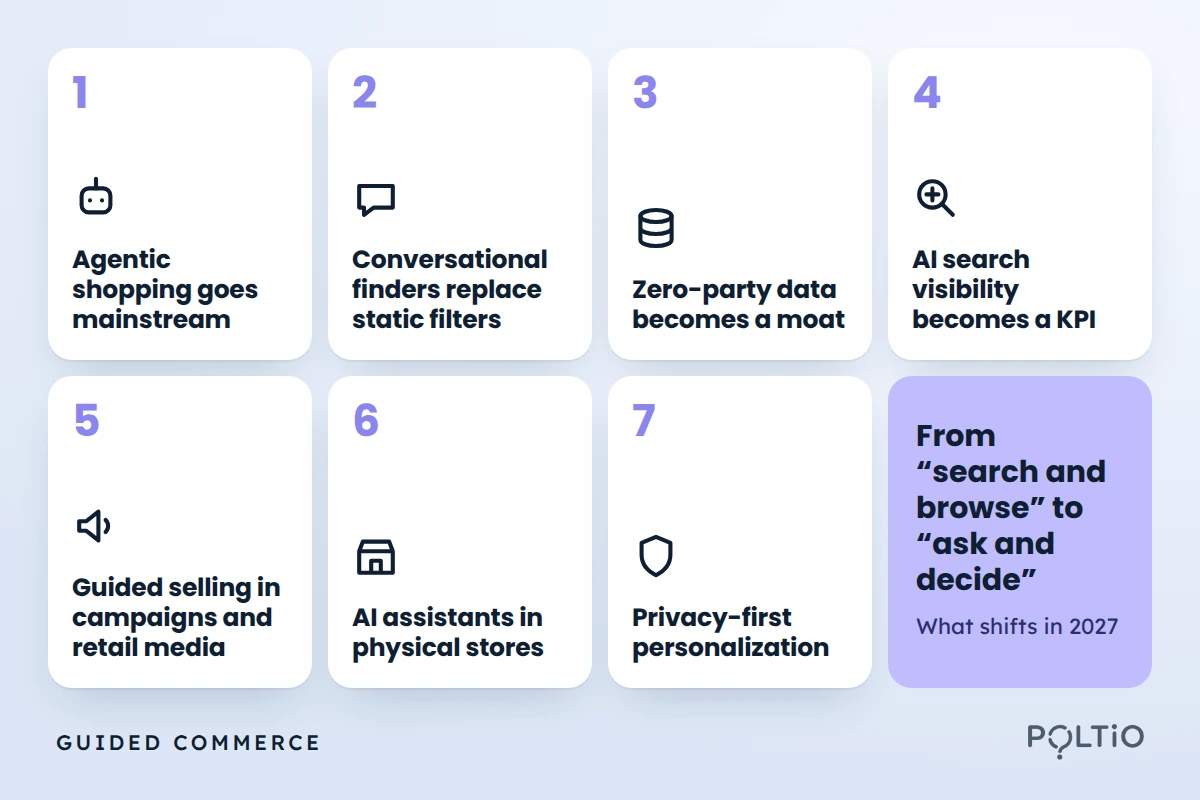
1. Agentic shopping goes mainstream
AI assistants are moving from recommending products to acting on the shopper’s behalf: comparing options, tracking prices and, increasingly, completing checkout. Major AI platforms, including ChatGPT, Google and Amazon, have been adding shopping and checkout features.
What it means for brands: Your products need to be understandable to machines as well as people. Structured, accurate product data and clear answers to “who is this for?” decide whether an agent picks your product.
Action: Audit your top 100 products for complete attributes and use-case descriptions.
2. Conversational product finders replace static filters
Shoppers who use AI assistants elsewhere now expect the same on your site: describe the need, get an answer. Filter sidebars will stay for experts, but the default entry point for undecided shoppers is becoming a guided or conversational flow.
What it means for brands: The category page of 2027 opens with a question, not a grid.
Action: Add a guided entry point (“Tell us what you need”) above the grid on your top three categories.
3. Zero-party data becomes a competitive moat
With tracking less reliable and AI platforms sitting between brands and shoppers, knowing what customers told you directly is one of the few advantages competitors can’t copy. Zero-party data, meaning information customers intentionally share, powers personalization across site, email and ads.
What it means for brands: Every guided flow is also a data strategy. The brands collecting stated needs at scale in 2027 will personalize better in 2028.
Action: Map every quiz and finder answer to a CRM field.
4. AI search visibility becomes a product-page KPI
Google’s AI Overviews, ChatGPT Search and Perplexity increasingly answer “what’s the best X for Y?” directly. Being cited in those answers is becoming as important as ranking in blue links.
What it means for brands: Product and category pages need direct answers, clear definitions, comparison tables and FAQs that AI systems can quote.
Action: Add a 2-sentence “Who is this for?” answer and an FAQ block to your top product and category pages.
5. Guided selling moves into campaigns and retail media
Guided experiences are leaving the product page. Brands are putting product finders and interactive quizzes into social ads, campaign landing pages, influencer links and retail media placements, turning paid traffic into guided journeys that also collect data.
What it means for brands: Campaign performance will increasingly be measured by decisions made and data captured, not just clicks.
Action: Replace one campaign landing page with a guided flow and compare conversion and cost per acquisition.
6. AI assistants arrive in physical stores
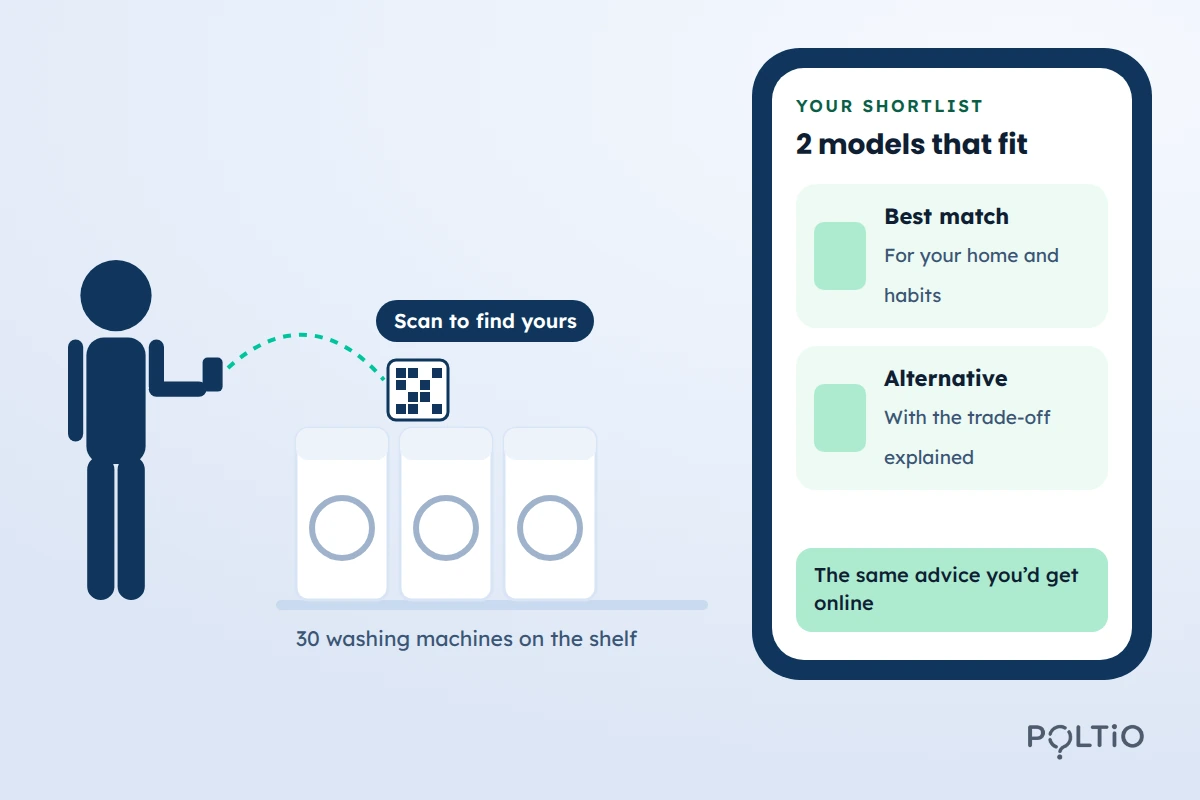
The same guided flows that work online are appearing on in-store screens, QR codes on shelves and staff tablets. A shopper scanning a code next to 30 washing machines gets the same personalized shortlist they’d get online.
What it means for brands: One guided selling engine can serve web, app and store, with consistent advice everywhere.
Action: Pilot a QR-code product finder in your highest-traffic store category.
7. Privacy-first personalization
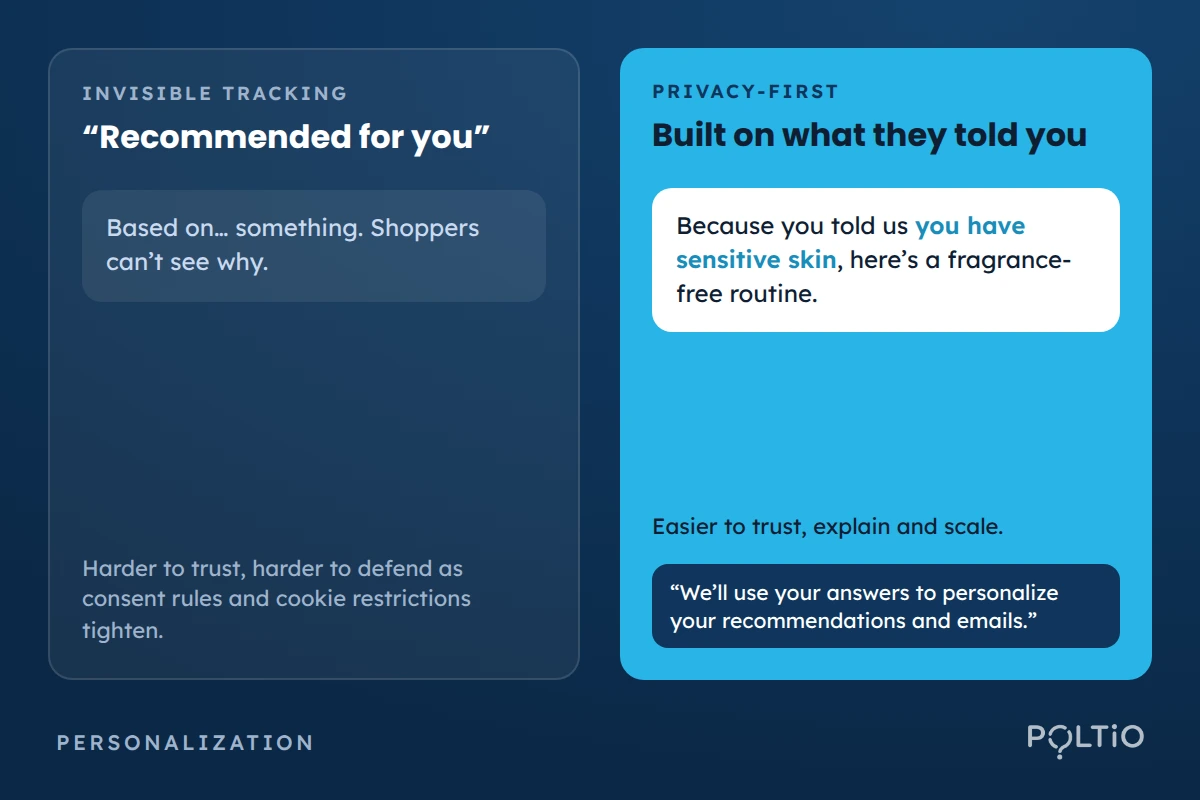
Consent requirements, cookie restrictions and consumer expectations are all pushing personalization toward transparency. Shoppers accept personalization when they understand it, and “because you told us you have sensitive skin” is easier to trust than invisible tracking.
What it means for brands: Personalization built on stated preferences will be easier to defend, explain and scale.
Action: Add a line to every guided flow explaining how answers will be used.
What stays the same
For all the change, one thing doesn’t move: shoppers buy when they feel confident they’re making the right choice. AI changes how that confidence is built, not the need for it. The brands that win in 2027 won’t be the ones with the most AI features; they’ll be the ones whose AI asks the best questions and gives the clearest reasons.
That’s what the numbers already show: across Poltio customers, shoppers in guided funnels convert 66% better than the site average, with about 20% higher basket value (usepoltio.com).
What to do in Q1 2027: a 5-step action list

- Fix the foundation. Enrich product data for your top 100 products: attributes, use cases, shopper-language tags.
- Add one guided entry point to your highest-traffic, highest-confusion category.
- Connect answers to your CRM and launch one answer-based email segment.
- Make your pages AI-quotable. Add direct answers, comparison tables and FAQs to key category pages.
- Pilot one campaign that sends paid traffic into a guided flow instead of a category page.
Frequently asked questions
What is guided commerce?
Guided commerce is an approach to ecommerce that helps shoppers decide by asking about their needs and recommending matching products, through product finders, quizzes and AI shopping assistants, on-site, in campaigns and in stores.
What is agentic commerce?
Agentic commerce is shopping in which AI agents act on a shopper’s behalf, researching, comparing and sometimes buying products based on the shopper’s instructions and preferences.
Will AI shopping assistants replace ecommerce websites?
Not replace, but change them. More discovery will start in AI assistants, so brand sites need to be the best place to finish the decision, with guidance, trust and personalization those assistants can’t offer.
How can brands prepare for AI search?
Publish clear, factual, well-structured content: direct answers, definitions, comparison tables, FAQs and complete product data. These are the elements AI systems find easiest to understand and cite.
Why does zero-party data matter more in 2027?
Because tracking signals are weaker and AI platforms increasingly sit between brands and shoppers. Knowing what customers told you directly is one of the most reliable ways to personalize.
Get ahead of 2027. Book a Poltio demo to see AI-led guided commerce on your catalog, and subscribe to our newsletter for more guided commerce insights.
Related reading: What Is a Guided Selling Platform? · Zero-Party Data Strategy · AI Shopping Assistant vs. Product Recommendation Engine