
Digital Shopping Assistants vs. Conversational Shopping
Which Personalization Approach Is Right for E-Commerce?
Comparing conversational chatbots and guided shopping journeys to understand which experience best supports customer service, product discovery, and confident purchase decisions.
How Digital Shopping Assistants and Chatbots Differ
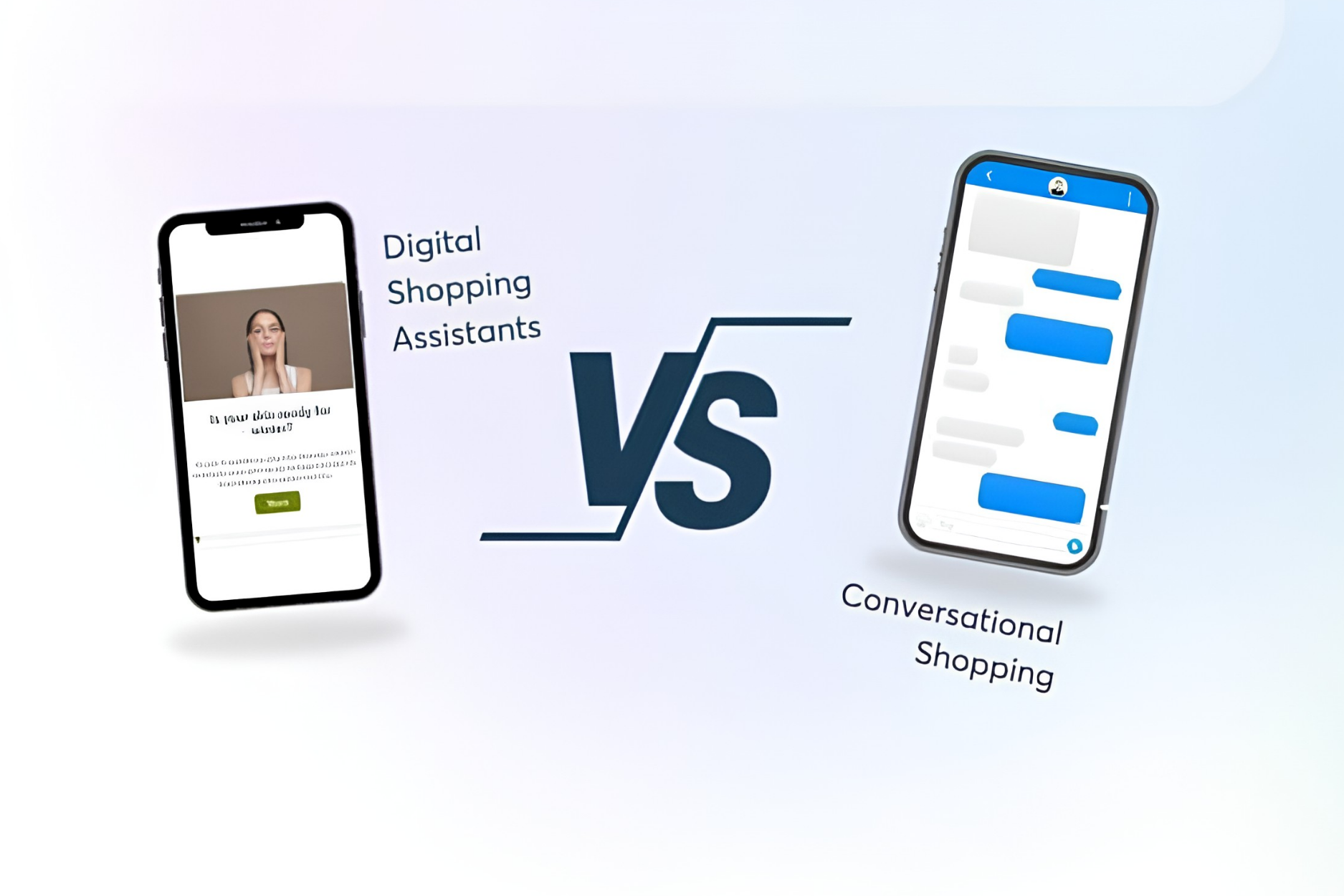
Both conversational shopping tools and Digital Shopping Assistants aim to create more personalized online experiences, but they guide customers in different ways. Chatbots use open-ended dialogue and work well when shoppers already know what they want to ask. Guided shopping journeys take a more structured approach, helping customers discover what they need through a sequence of relevant questions. The result is two different paths to personalization: one focused on answering questions, the other on simplifying decisions.
Chatbots: Built for Questions and Customer Support
Conversational chatbots are useful when customers need quick answers or service-related support. They are particularly effective for questions such as:
- Where is my order?
- Is this product in stock?
- How can I return an item?
- What are the delivery options?
In these situations, the customer already understands what they need and the goal is to provide an efficient response.
Digital Shopping Assistants: Built for Product Decisions
Digital Shopping Assistants are designed for shoppers who are unsure which product best fits their needs. Instead of waiting for the customer to know what to ask, the experience guides them through structured questions about:
- Needs
- Lifestyle
- Preferences
- Usage habits
- Purchase priorities
These answers translate complex product information into customer-friendly recommendations and help shoppers move toward suitable options with greater confidence.
Better Guidance. Better Shopping Experience.
The right solution depends on the customer journey. Chatbots are well suited to service and support, while guided Digital Shopping Assistants are particularly valuable in categories where shoppers need help comparing products and understanding what matters. This includes categories such as electronics, beauty, home appliances, fashion, and gifting. By narrowing the catalog and focusing on relevant products, guided journeys can reduce decision fatigue and make online shopping easier to complete.
The Impact of Structured Product Guidance
Digital Shopping Assistants help transform product complexity into a clearer path to purchase. They can support:
- More relevant product recommendations
- Reduced decision fatigue
- Greater purchase confidence
- Better understanding of customer intent
- Stronger customer trust
- More focused product discovery
Rather than replacing conversational tools, guided journeys serve a different purpose: helping shoppers make decisions when they do not yet know exactly what to choose.
Frequently Asked Questions
What is the difference between a Digital Shopping Assistant and a chatbot?
A chatbot uses open-ended conversation to answer customer questions, while a Digital Shopping Assistant uses structured guidance to help shoppers discover suitable products.
When should brands use a chatbot?
Chatbots are useful for service-related needs such as delivery, stock, returns, and other questions where customers already know what information they need.
When should brands use a Digital Shopping Assistant?
Digital Shopping Assistants are useful when customers need help understanding their needs, comparing products, and choosing the most suitable option.
Can brands use both chatbots and guided shopping journeys?
Yes. Chatbots can support customer service while Digital Shopping Assistants guide product discovery and purchase decisions.
Explore Poltio’s Guided Selling Solutions
Discover how Poltio’s AI Digital Shopping Assistant, Guided Selling Solution, Smart Recommendations, and Smart Segments help brands transform customer intent into personalized product discovery.