
First-Party, Second-Party, and Third-Party Data
How Different Data Types Support Smarter Marketing Strategies
Understanding where customer data comes from and how first-party, second-party, and third-party data can support personalization, segmentation, and better marketing decisions.
How Data Types Shape Marketing Strategy
Data-driven marketing starts with understanding where customer information comes from and how reliable that information is. First-party, second-party, and third-party data each provide different levels of customer insight and control. Brands can also combine behavioral, transactional, and declared data to create a more complete view of their audience. The result is a stronger marketing strategy built on relevant customer insight not assumptions alone.
First-Party Data: Direct Customer Relationships
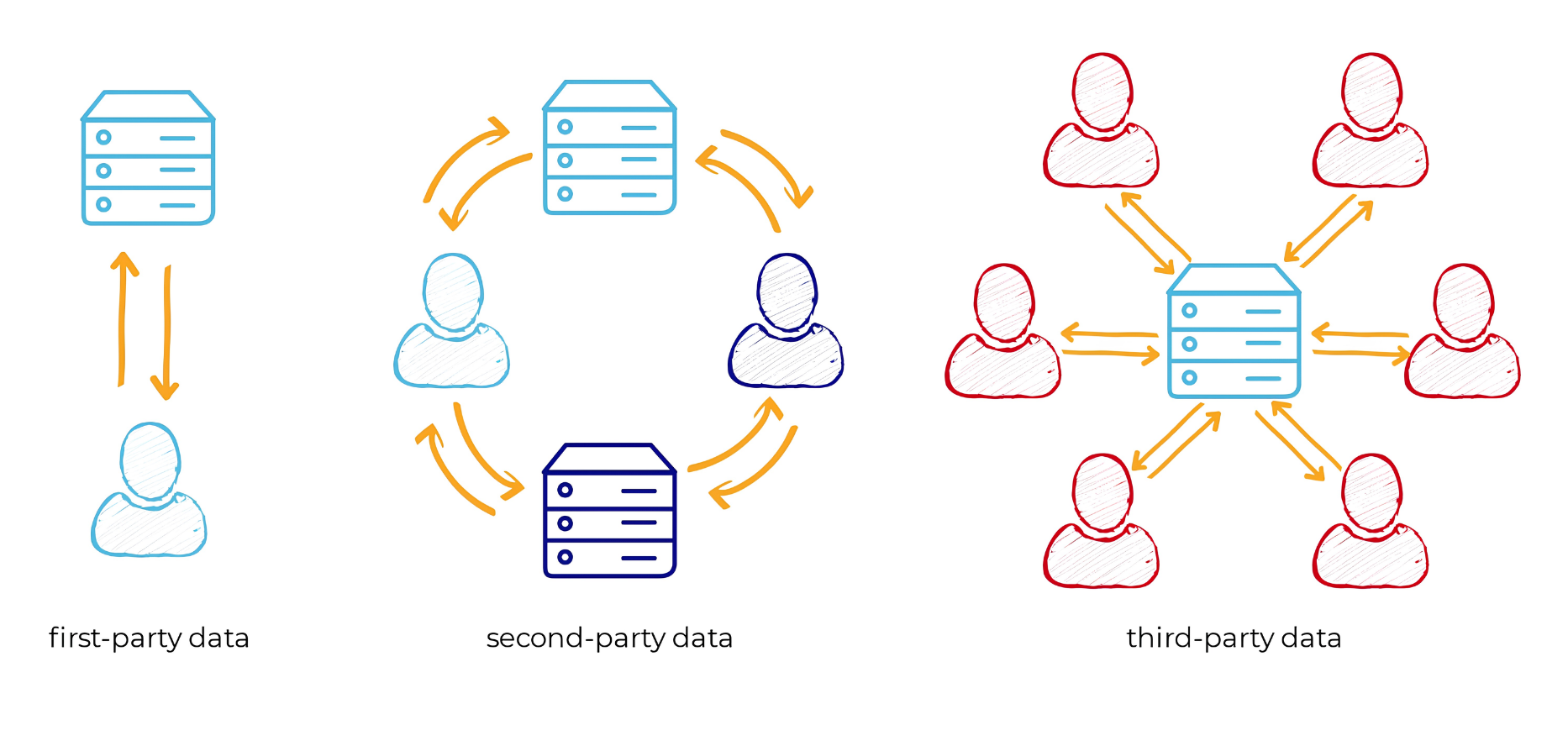
First-party data is information a brand collects directly from its own customers and digital channels. This can include:
- Website interactions
- Product views
- CRM information
- Purchase history
- Customer responses
Because the information comes directly from the brand’s audience, first-party data can support more accurate segmentation and personalized experiences.
Second-Party and Third-Party Data: Expanding Audience Insight
Second-party data is another company’s first-party data shared through a direct partnership. Brands can use this approach to reach new but relevant audiences based on shared interests or demographic overlap. Third-party data comes from external data providers that aggregate information from multiple sources. It can help brands expand audience reach, but it is collected without the same direct customer relationship found in first-party data.
Beyond Data Sources: Understanding Customer Behavior and Intent
Customer data can also be grouped by how it is collected. Behavioral data reflects what customers do, such as browsing products or searching a website. Transactional data reflects completed actions such as purchases, payments, or registrations. Declared data is information customers actively share through surveys, quizzes, polls, or forms. Combining these signals helps brands understand not only what customers do, but also what they say they want.
The Impact of Better Customer Data
A strong data strategy combines direct customer relationships with behavioral and voluntarily shared insights. This can support:
- More accurate customer segmentation
- More relevant personalization
- Better audience targeting
- Stronger CRM profiles
- More informed marketing decisions
- Deeper understanding of customer intent
Declared and first-party data are particularly valuable because they come directly from customer interactions and can help brands build more customer-centric experiences.
Frequently Asked Questions
What is first-party data?
First-party data is information a brand collects directly from its own customers through websites, apps, CRM systems, purchases, and other interactions.
What is second-party data?
Second-party data is another company’s first-party data shared through a direct partnership or agreement.
What is third-party data?
Third-party data is customer information collected and aggregated by external data providers from multiple sources.
What is declared data?
Declared data is information customers intentionally share through surveys, quizzes, forms, polls, or other direct interactions.
Explore Poltio’s Data Enrichment Solutions
Discover how Poltio’s Data Enrichment, Interactive Quizzes, Smart Segments, and AI Digital Shopping Assistant help brands turn customer interactions into richer profiles and more personalized digital journeys.