
Guided Selling for Beauty & Skincare Brands: A Playbook
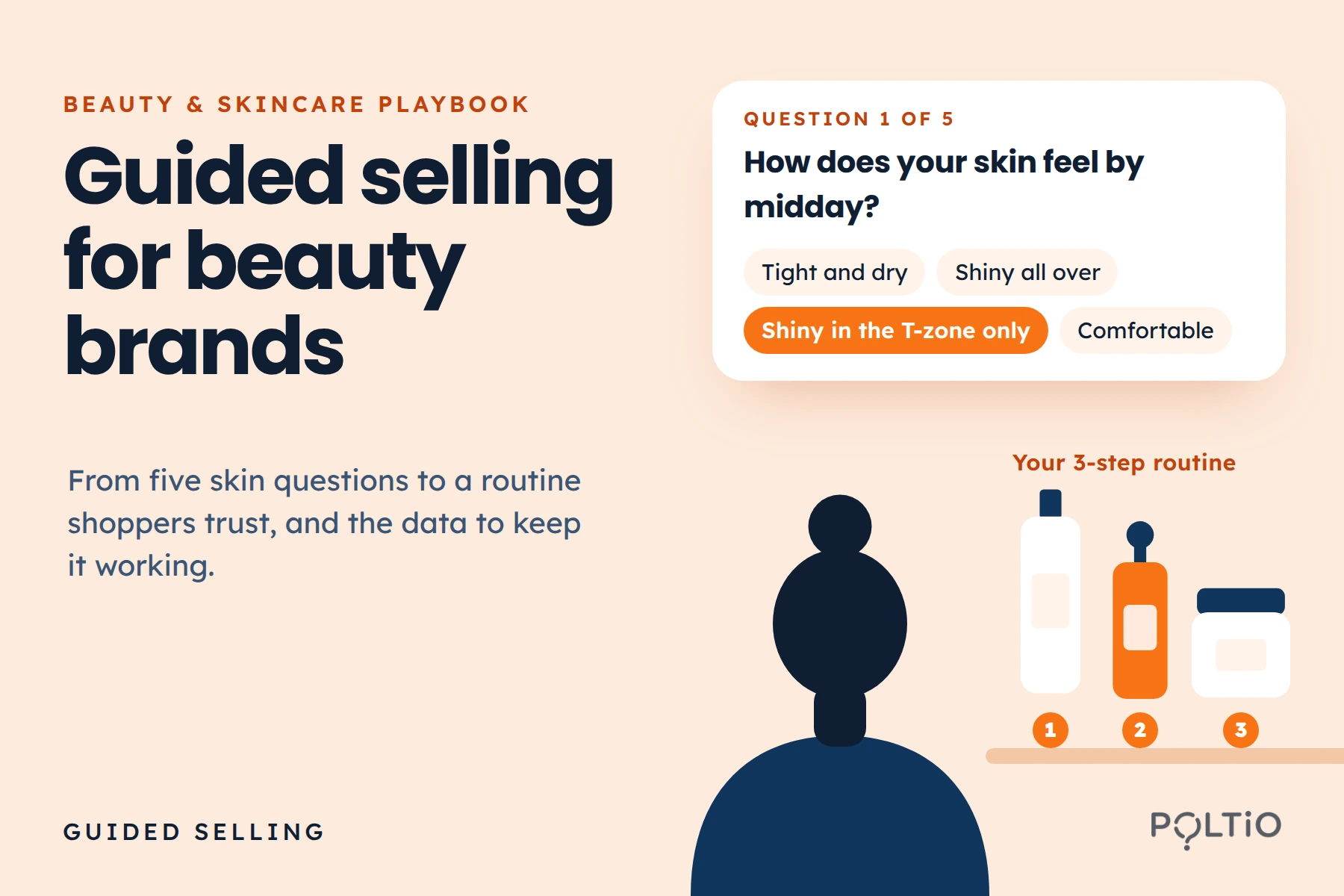
Skincare shoppers don’t buy products. They buy a routine that works for their skin.
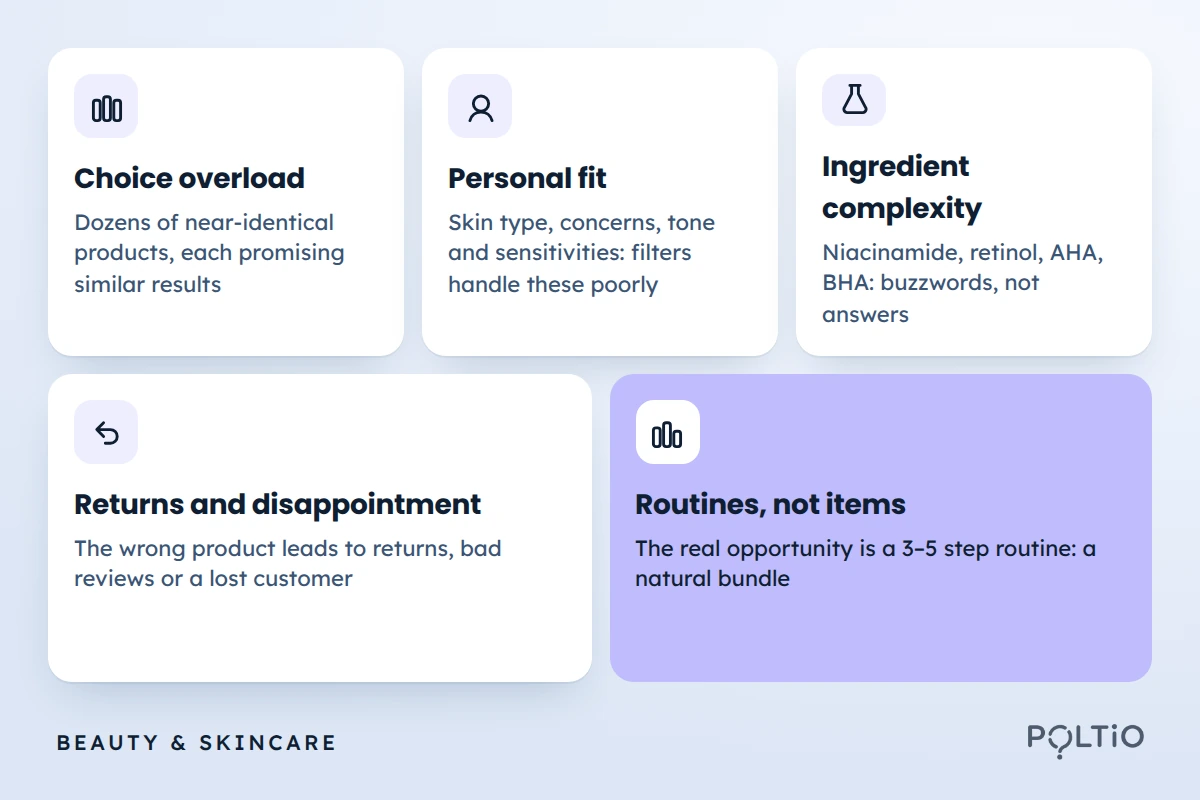
That’s why beauty is one of the hardest categories to sell online. In a store, an advisor looks at your skin, asks two questions and hands you three products. Online, shoppers face 40 serums, ingredient lists they can’t decode and reviews from people whose skin is nothing like theirs. Guided selling brings the advisor back.
Quick answer: Guided selling for beauty and skincare uses short, interactive product finders or skin quizzes that ask shoppers about their skin type, concerns, routine preferences and sensitivities, then recommend a personalized product or full routine. It helps shoppers choose with confidence, raises basket value through routine bundles and captures zero-party data brands can use for replenishment and personalized marketing.
Why beauty needs guided selling
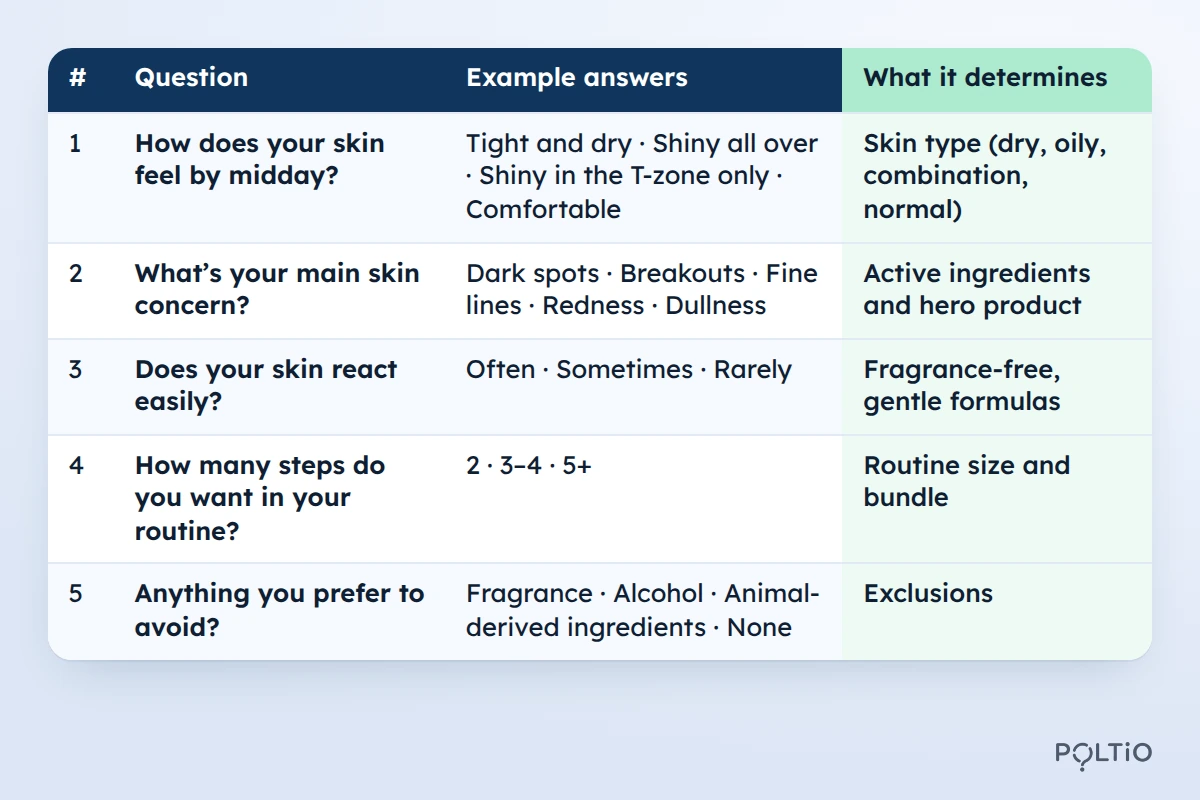
The 5 questions every skincare finder should ask
Five well-chosen questions are enough to recommend a confident routine. Each maps to a product attribute your catalog should hold.
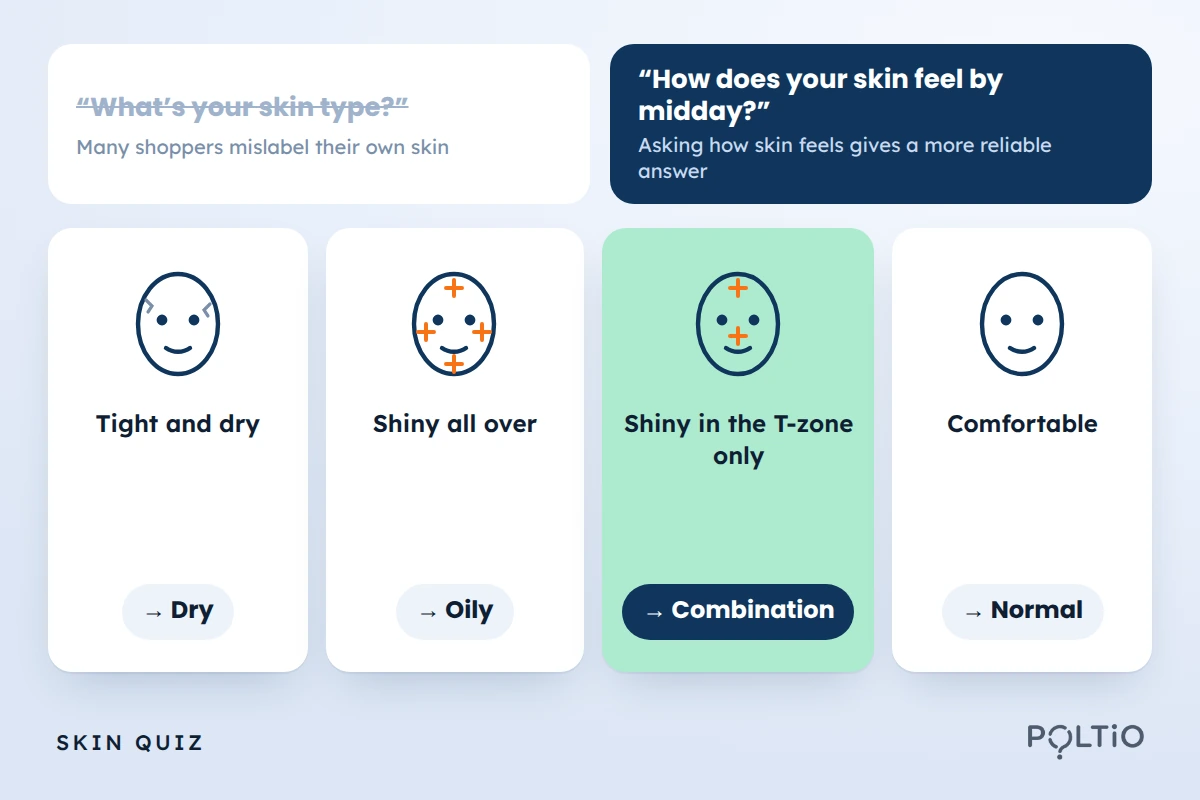
Why question 1 is phrased that way: many shoppers mislabel their own skin type. Asking how skin feels gives a more reliable answer than “What’s your skin type?”
Optional additions: age range (for anti-aging lines), climate (humid vs. dry), budget and SPF usage.
Example flow: from skin type to routine bundle

- Entry: “Find your routine in 60 seconds” on the homepage, skincare category page and Instagram bio link.
- Questions 1–5 as above, one per screen, with image answers where helpful.
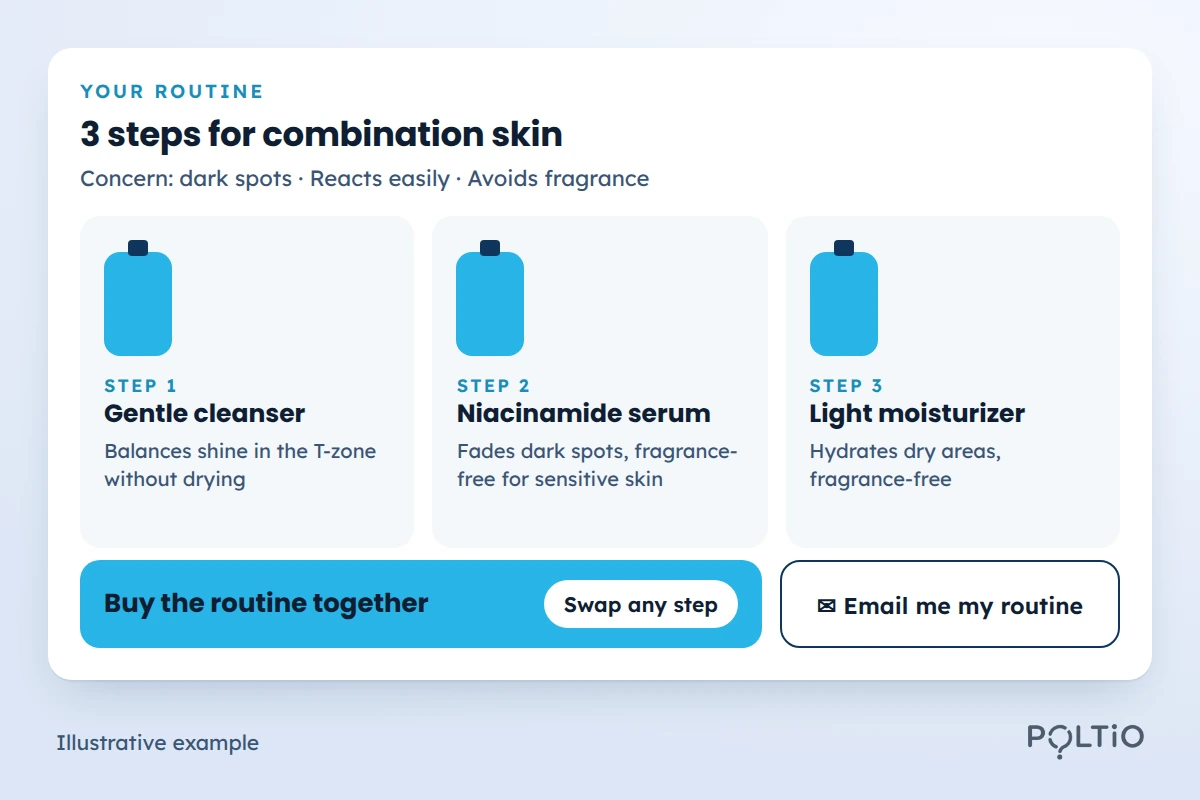
- Result: a 3-step routine (cleanser, treatment serum, moisturizer) with a reason for each: “Niacinamide serum to fade dark spots, fragrance-free for sensitive skin.”
- Bundle offer: buy the routine together at a small discount, with the option to swap any step.
- Save and send: “Email me my routine” captures consent and the email address.
- Follow-up: a morning-and-evening routine guide by email, then a refill reminder timed to product size.
Using zero-party data for replenishment and personalization
Every answer in a skin quiz is zero-party data: information the shopper chose to share. In beauty, it’s unusually valuable because skin needs are stable enough to plan around and personal enough to make marketing feel like advice.
Five ways beauty brands use it:
- Replenishment timing. A 50 ml serum used twice daily runs out in roughly two to three months. Send the reminder before it does.
- Concern-based content. Shoppers who chose “dark spots” get education on vitamin C and SPF, not acne tips.
- Launch targeting. A new fragrance-free moisturizer goes first to shoppers who said their skin reacts easily.
- Seasonal switches. Dry-skin shoppers get a richer winter routine suggestion when temperatures drop.
- Exclusions. Never email fragrance-heavy products to someone who said they avoid fragrance.
Poltio reports up to 7x higher email click-through rates across its customers (usepoltio.com). Beauty brands such as Yves Rocher are among the brands using Poltio.
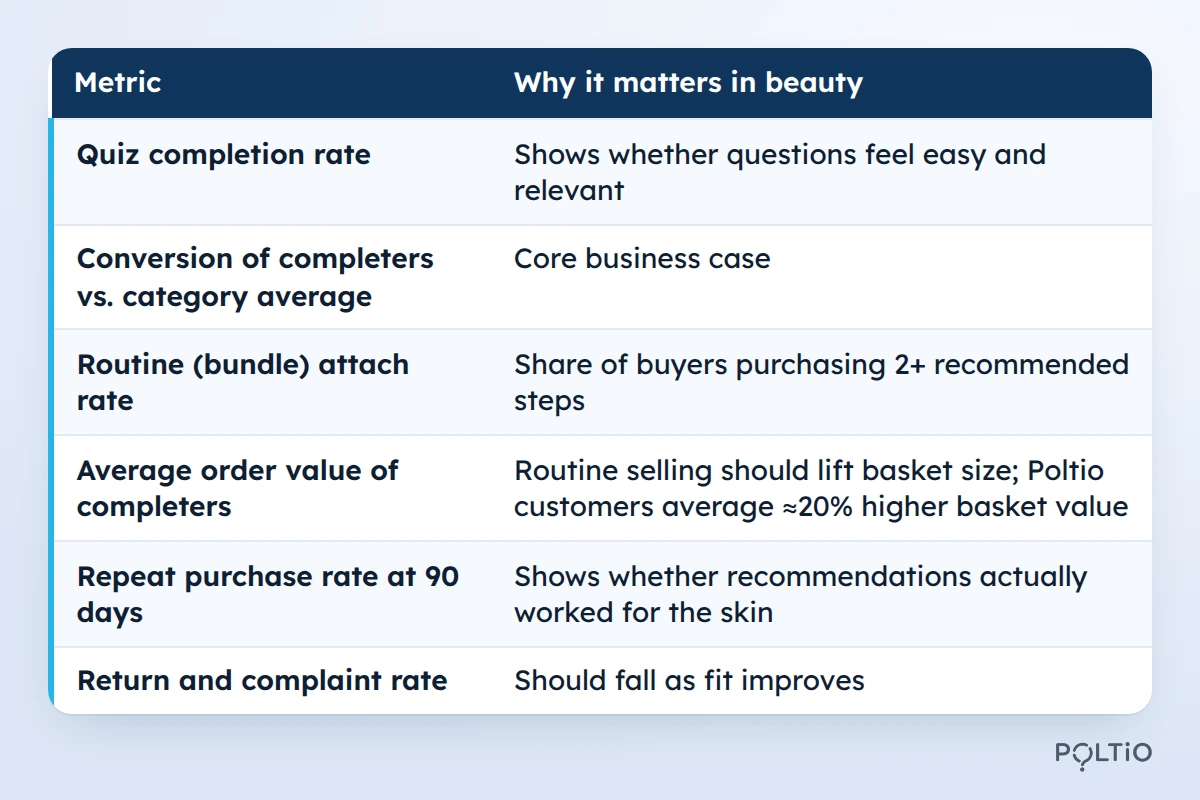
Metrics beauty brands should track
Frequently asked questions
What is a skincare product finder?
A skincare product finder is an interactive quiz on a beauty website that asks about skin type, concerns and preferences, then recommends suitable products or a full routine.
How many questions should a skin quiz have?
Five is a good default. Add more only if each one clearly changes the recommendation, for example climate or age range for specific product lines.
Do skin quizzes increase sales?
Well-designed quizzes typically raise conversion and basket value by recommending complete routines with clear reasons. Across Poltio customers, shoppers in guided funnels convert 66% better than the site average.
Can a quiz replace an in-store beauty advisor?
It can replicate the most common advice (skin type, concern, routine) at scale and at any hour. Complex skin conditions still need a dermatologist, and the quiz should say so where relevant.
How do I use skin quiz data in email?
Send answers to your email platform as profile properties, then create segments by skin type, concern and sensitivity for welcome flows, content and replenishment reminders.
Give every shopper a personal beauty advisor. Book a Poltio demo or try the demo store.
Related reading: What Is a Product Recommendation Quiz? · Zero-Party Data Strategy · 10 Guided Selling Examples