
Guided Selling for Furniture & Home Goods Ecommerce
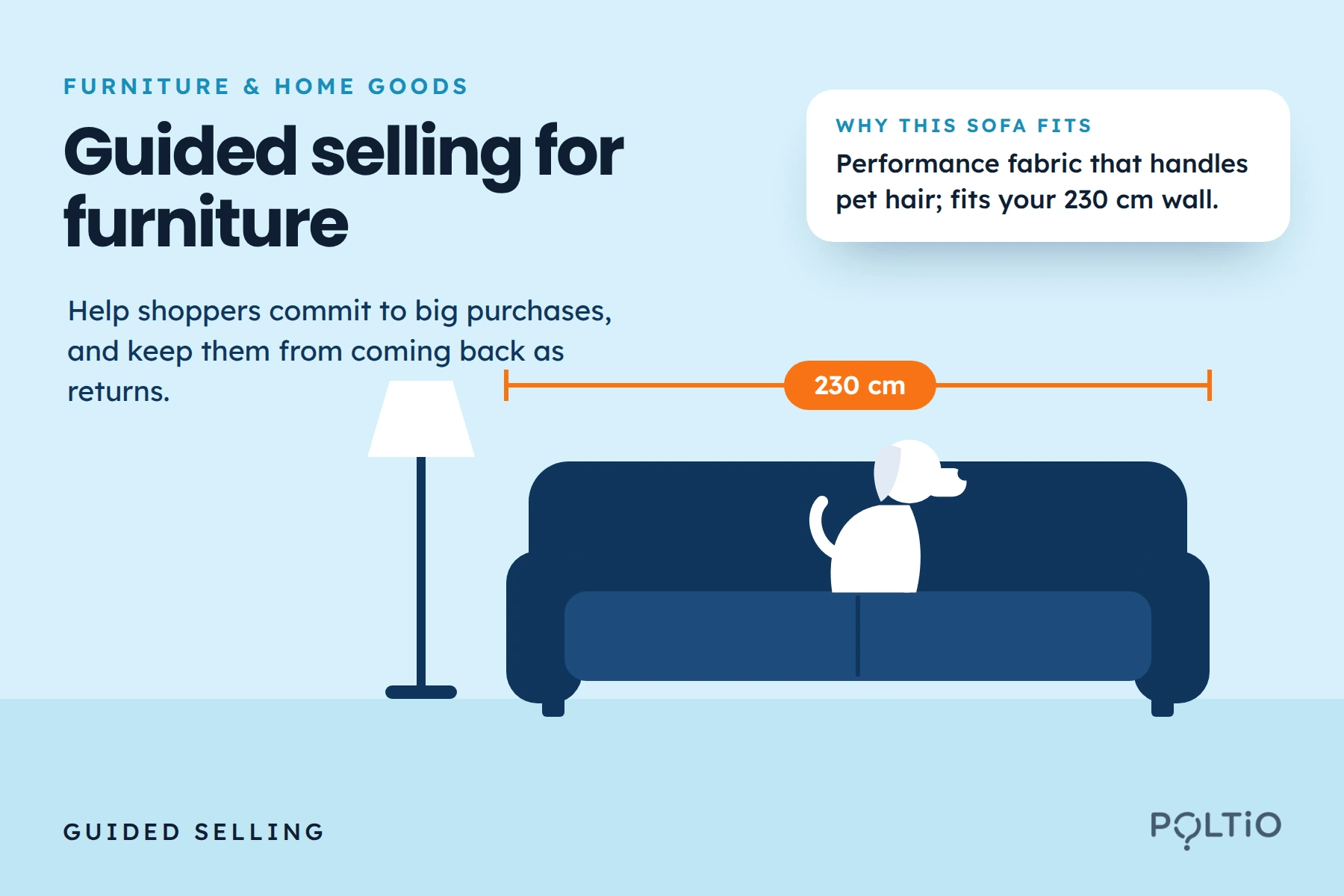
In a showroom, shoppers sit, touch, measure and ask. Online, they get photos, a dimensions table and a return policy they hope not to need. That gap is why so many furniture shoppers browse for weeks and still don’t buy, and why guided selling fits the category so well.
Quick answer: Guided selling for furniture and home goods uses interactive product finders and style quizzes that ask shoppers about their room, space, lifestyle, style and budget, then recommend products that fit. It helps shoppers commit to high-value purchases, reduces “doesn’t fit” and “not what I expected” returns and captures preferences brands can use for personalized follow-up.
Why home goods are hard to buy online
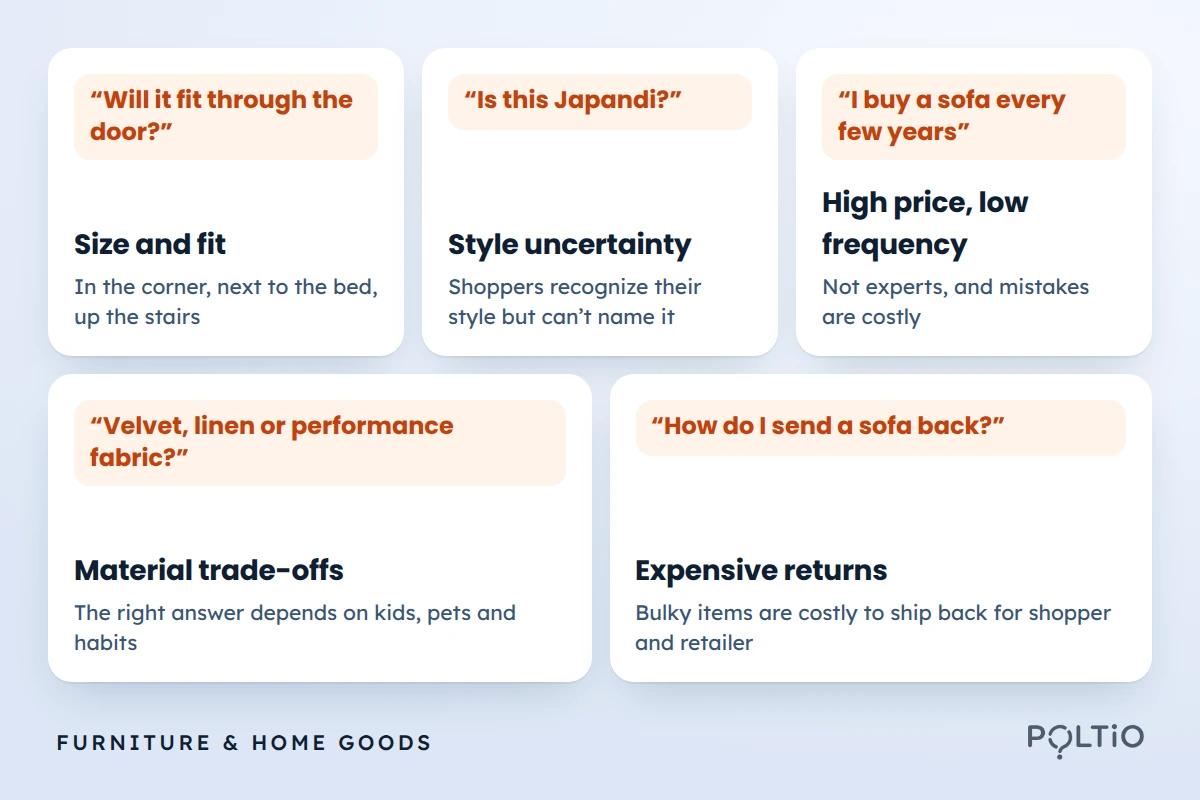
- Size and fit. Will it fit through the door, in the corner, next to the bed?
- Style uncertainty. Shoppers know what they like when they see it, but can’t describe it as “Japandi” or “mid-century”.
- High price, low frequency. People buy a sofa every several years, so they’re not experts, and mistakes are costly.
- Material trade-offs. Velvet vs. linen vs. performance fabric; memory foam vs. pocket springs. The right answer depends on kids, pets and habits.
- Expensive returns. Bulky items are costly to ship back, for both shopper and retailer.
Three guided selling flows for furniture and home
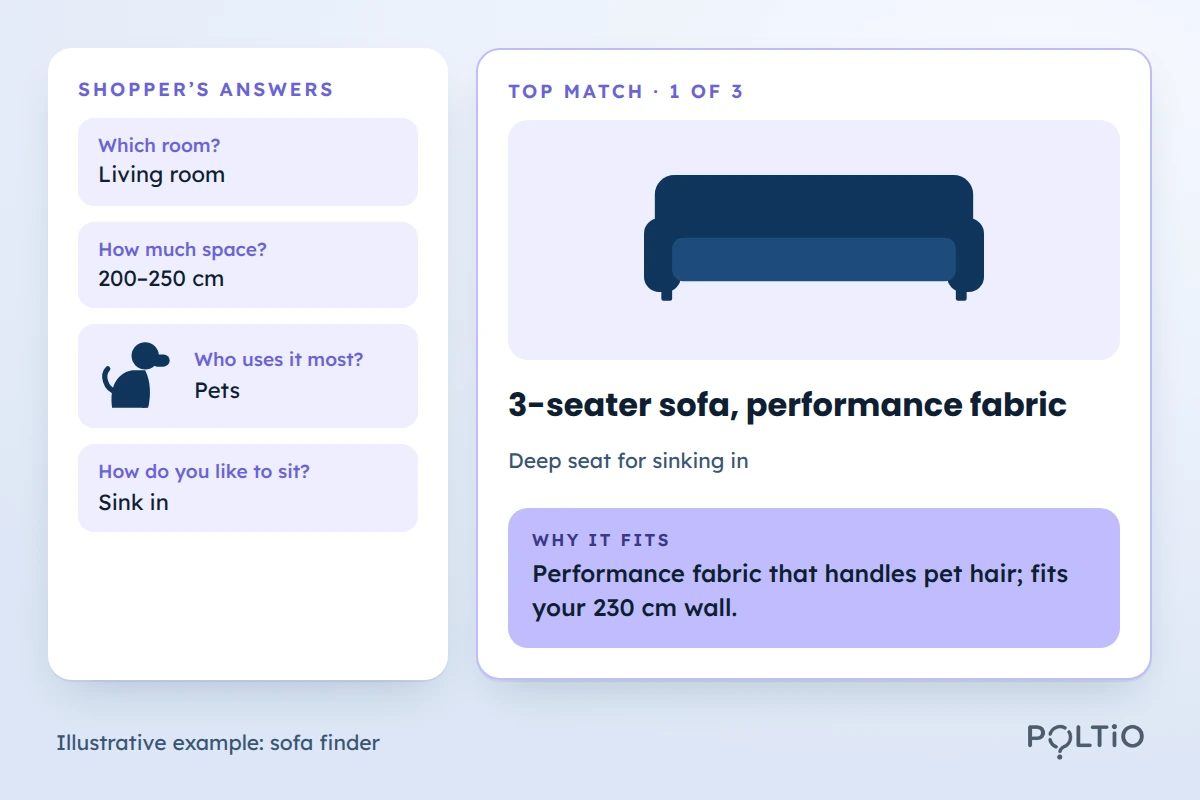
1. The sofa finder
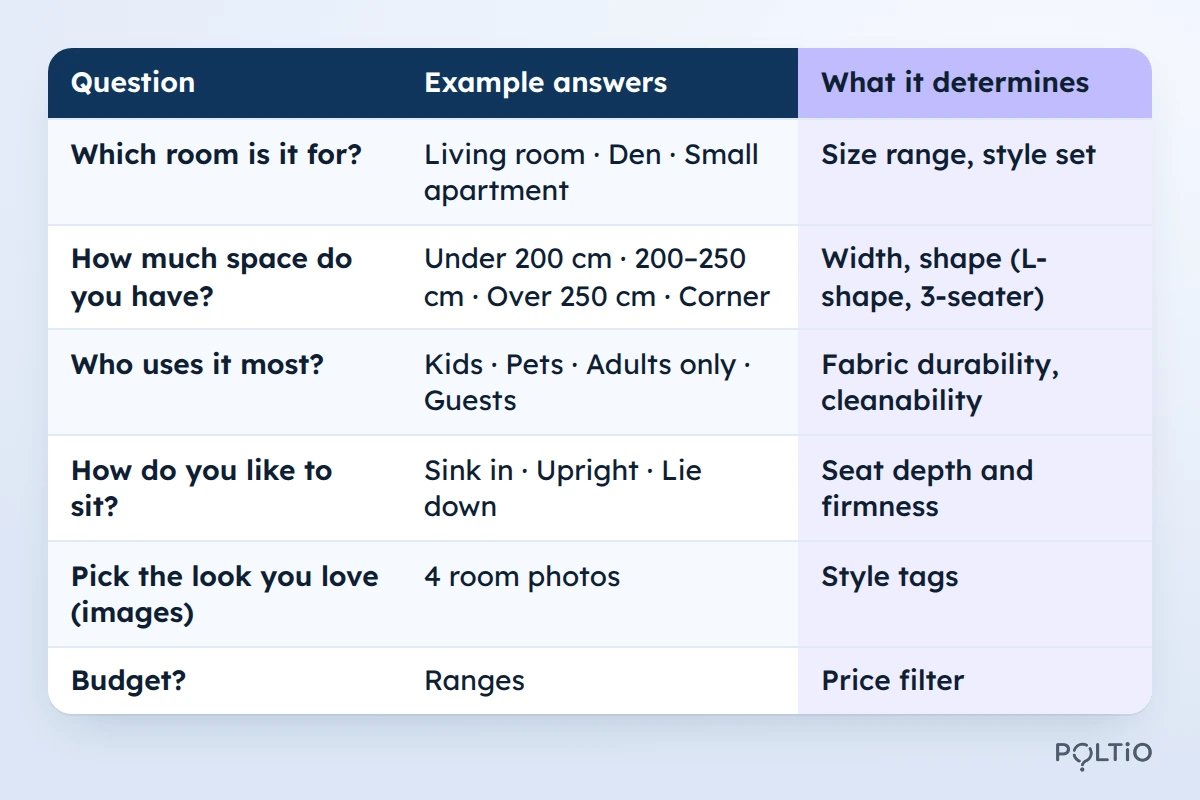
Result: 2–3 sofas with reasons, like “Performance fabric that handles pet hair; fits your 230 cm wall.”
2. The mattress advisor
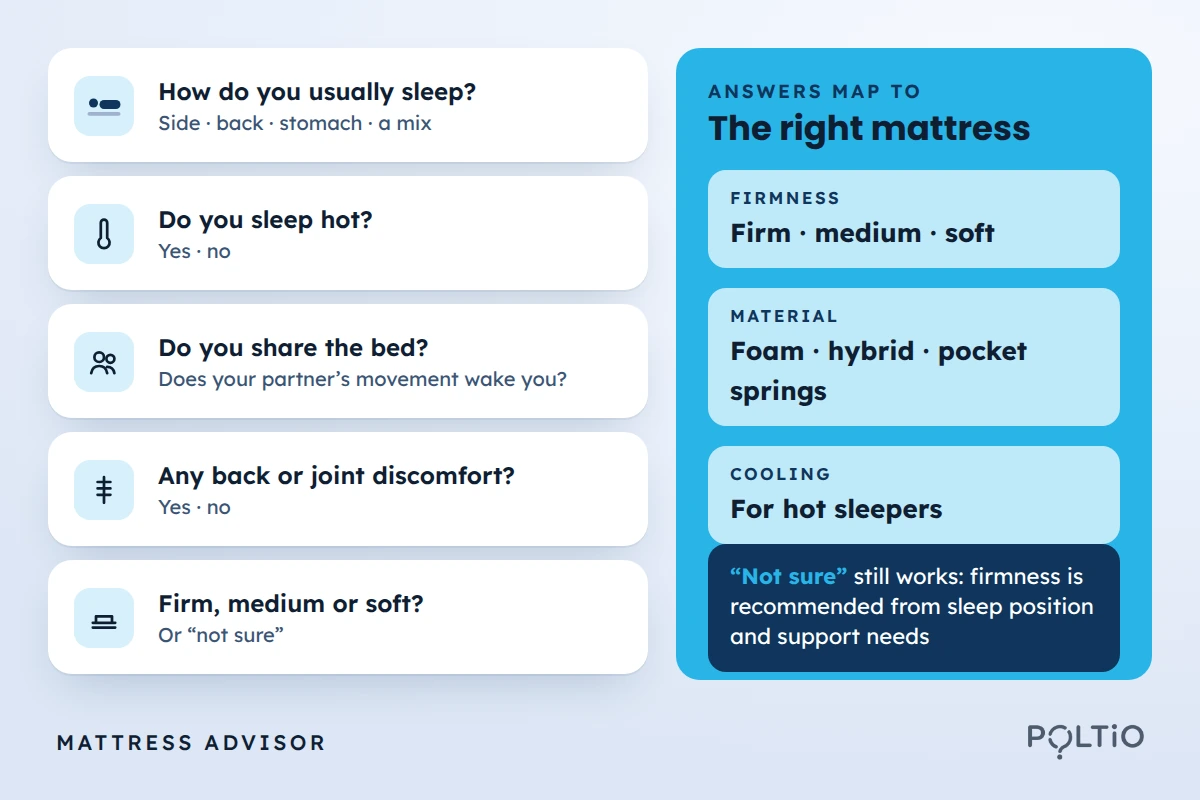
Mattresses are the classic high-consideration, can’t-try-online product. A good advisor asks:
- How do you usually sleep? (Side, back, stomach, a mix)
- Do you sleep hot?
- Do you share the bed, and does your partner’s movement wake you?
- Any back or joint discomfort?
- Firm, medium or soft preference, or “not sure”?
Answers map to firmness, material (foam, hybrid, pocket springs) and cooling features. The “not sure” option matters: the advisor should recommend a firmness based on sleep position and body support needs.
3. The style finder
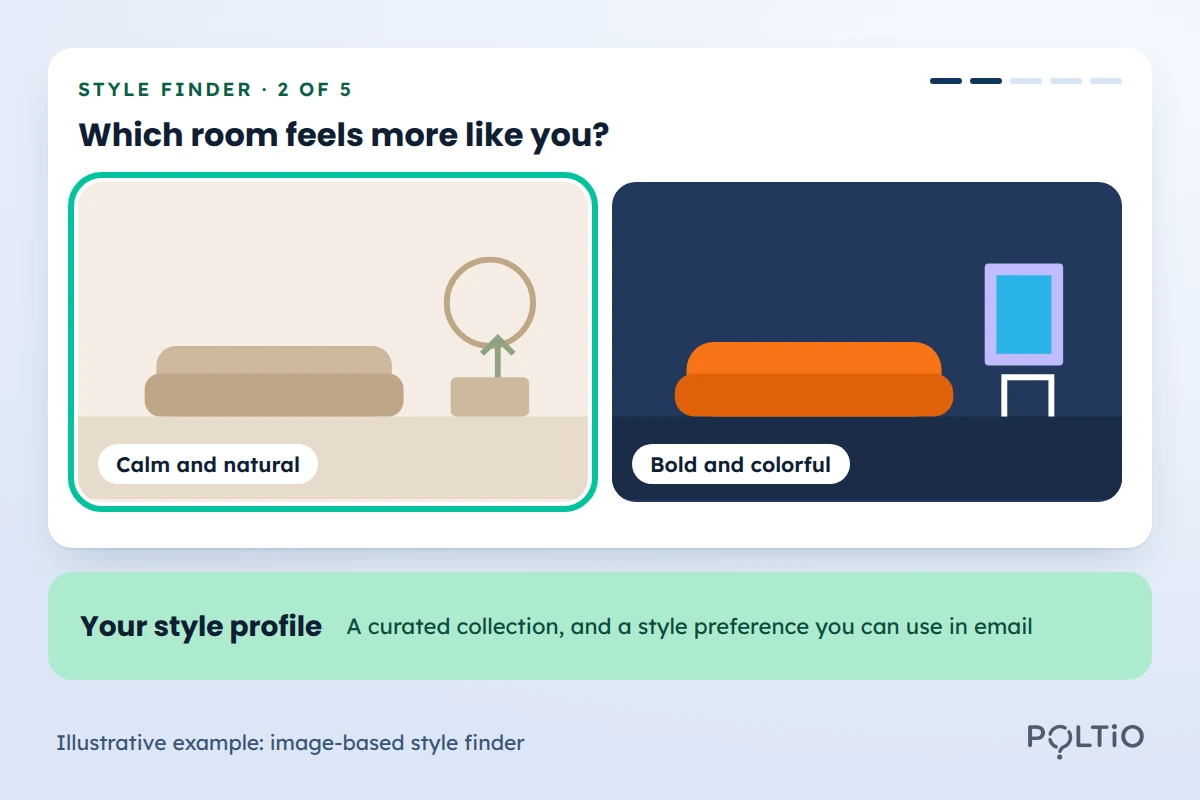
Many shoppers can’t name their style but can recognize it. A style finder shows image pairs (“Which room feels more like you?”) across 4–6 screens, then recommends a style profile and a curated collection. It works as an on-site tool and as a campaign or social format, and every answer becomes a style preference you can use in email.
Reducing returns with pre-purchase fit questions
Many furniture returns come down to two reasons: it didn’t fit and it wasn’t what I expected. Both can be tackled before checkout by asking the right questions.
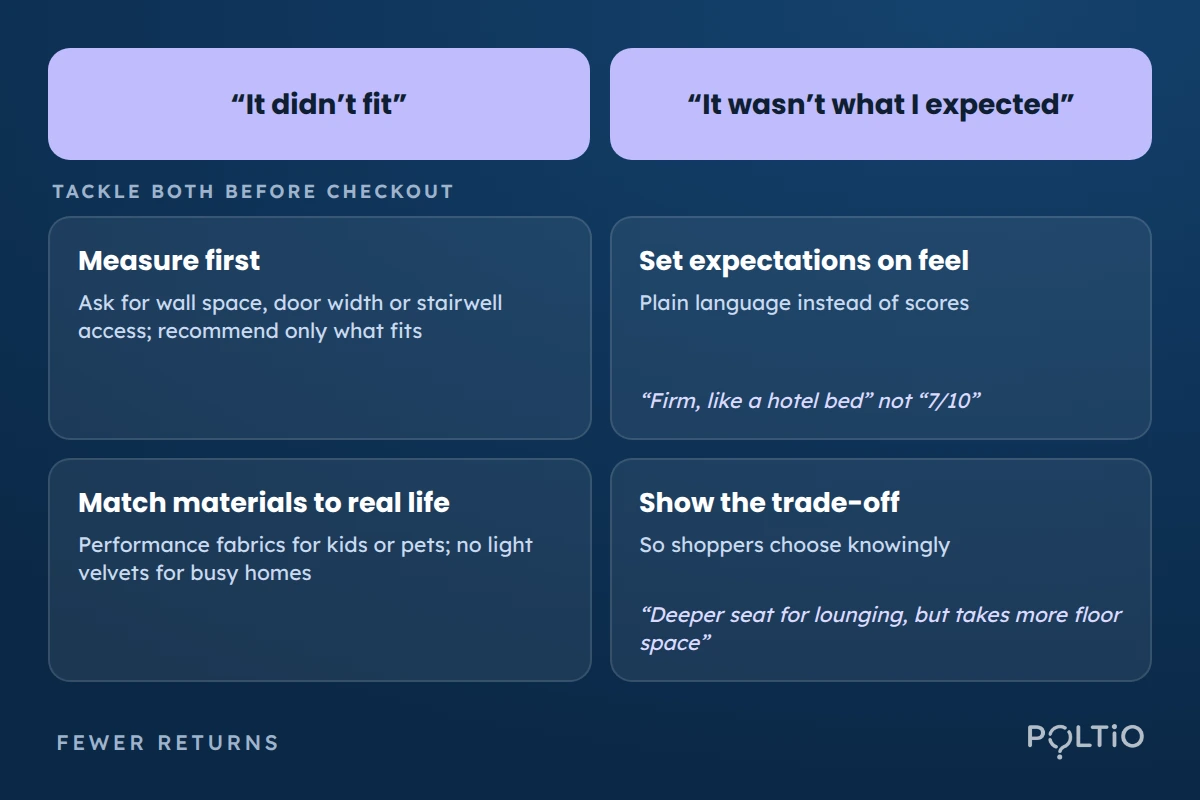
- Measure first. Ask for available wall space, door width or stairwell access, and only recommend products that fit. Add a reminder to measure before ordering.
- Set expectations on feel. Translate firmness, softness and texture into plain language: “firm, like a hotel bed” rather than “7/10”.
- Match materials to real life. Recommend performance fabrics when shoppers mention kids or pets; avoid light velvets for busy households.
- Show the trade-off. “Deeper seat for lounging, but takes more floor space” helps shoppers choose knowingly.
Editor: add a return-rate result from a Poltio customer in home goods if available.
Guided selling + AR and room visualizers

AR and room visualizers answer “how will it look?” Guided selling answers “which one should I look at?” They work best in sequence:
- The guided flow narrows 400 sofas to 3 that fit the space, style and household.
- The shopper views those 3 in their room with AR.
- The chosen product goes in the cart, with the shopper’s answers saved for follow-up and delivery planning.
Without the first step, AR becomes a slow way to browse too many options.
Metrics furniture retailers should track
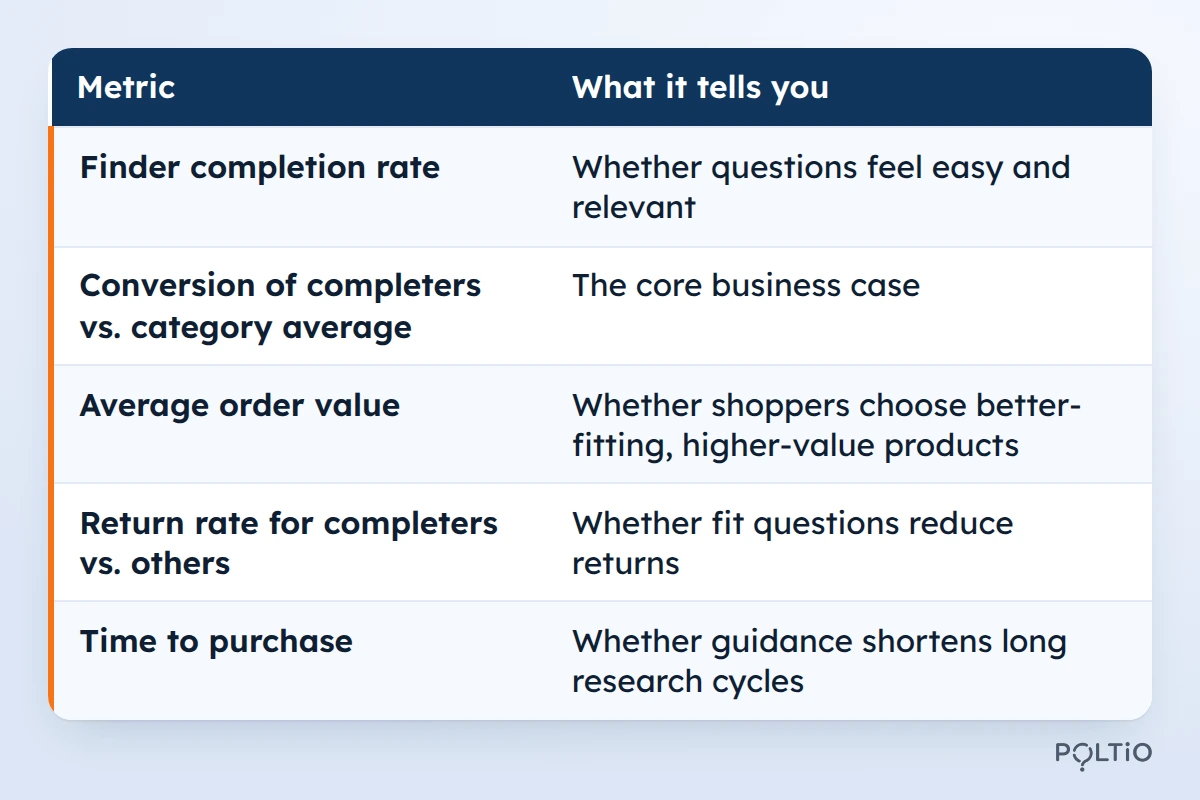
Across Poltio customers, shoppers in guided funnels convert 66% better than the site average, with about 20% higher basket value (usepoltio.com).
Frequently asked questions
What is a furniture product finder?
A furniture product finder is an interactive tool on a retailer’s website that asks shoppers about their room, space, household and style, then recommends furniture that fits.
Can guided selling reduce furniture returns?
Yes, when it includes fit and expectation questions. Asking for available space and household needs before recommending products helps prevent the most common “didn’t fit” and “not as expected” returns.
How does a mattress quiz work?
A mattress quiz asks about sleep position, temperature, partner disturbance and comfort preferences, then maps the answers to firmness and materials to recommend suitable mattresses.
Should furniture retailers use AR or guided selling?
Both, in sequence. Guided selling narrows the choice to a few suitable products; AR helps the shopper visualize them in their room.
Does guided selling work for home accessories and decor?
Yes, especially as style finders and gift finders, which help shoppers choose from large, visually similar ranges.
Help shoppers commit to their next big purchase. Book a Poltio demo or try the demo store.
Related reading: What Is a Guided Selling Platform? · Guided Selling vs. Traditional Product Filters · 10 Guided Selling Examples