
Guided Selling Software Evaluation
How to Choose the Right Guided Selling Software
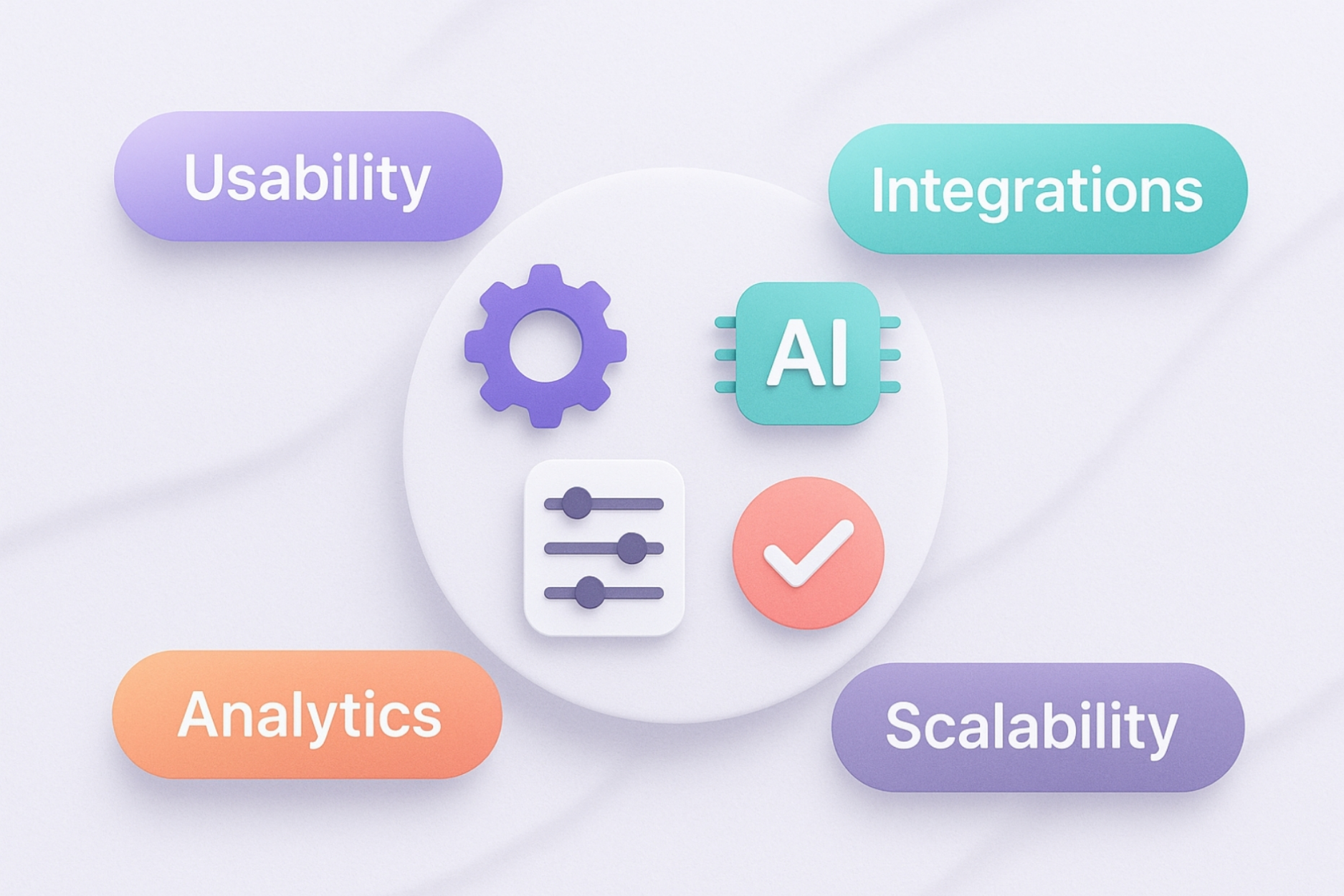
Evaluating usability, integrations, scalability, analytics, and AI-powered personalization to find a guided selling platform that can grow with your business.
What to Look for in Guided Selling Software
The right guided selling software should make complex product decisions easier for customers without creating additional complexity for internal teams. A strong platform needs to be easy to build, simple to integrate, and flexible enough to support different catalogs, markets, and customer journeys. The result is a guided selling setup that can scale and continuously improve not a tool that creates more manual work.
Easy Setup and Seamless Integrations
Guided selling software should allow teams to create and update journeys without relying heavily on development resources. Key capabilities include:
- No-code or low-code flow design
- Shopify integration
- Google Tag Manager integration
- CRM connectivity
- Easy journey updates
Reducing setup and maintenance effort makes it easier for teams to test, launch, and optimize experiences continuously.
Scalable Personalization and Product Guidance
As product catalogs and markets grow, guided selling software needs to support greater complexity. Brands should look for:
- Multilingual experiences
- Multi-brand catalogs
- Dynamic question flows
- AI-powered personalization
- Flexible recommendation logic
The goal is to deliver relevant product guidance while maintaining control over how recommendations are generated.
Better Analytics. Better Optimization.
Analytics and transparency are essential for understanding whether a guided journey is actually working. Teams should be able to track engagement, conversion, and customer behavior while also understanding why specific products are recommended. This visibility helps brands:
- Identify journey friction
- Improve recommendation logic
- Test different flows
- Understand customer intent
- Continuously optimize performance
If recommendation logic is not transparent, it becomes much harder to improve the experience.
The Impact of Choosing the Right Guided Selling Platform
Guided selling software is not only a technology decision. It also affects how quickly teams can build, maintain, and optimize customer journeys. The right platform can support:
- Faster implementation
- Easier experimentation
- More relevant recommendations
- Stronger customer insights
- Scalable personalization
- Lower operational complexity
Reducing unnecessary manual work allows teams to spend more time improving the customer experience and less time maintaining the technology behind it.
Frequently Asked Questions
What is guided selling software?
Guided selling software helps shoppers find suitable products through interactive questions, recommendation logic, and personalized product guidance.
What should brands look for in guided selling software?
Key criteria include ease of use, integrations, scalability, analytics, personalization capabilities, and transparent recommendation logic.
Why are integrations important?
Integrations connect guided selling experiences with e-commerce platforms, CRM systems, analytics tools, and existing customer data.
Why is recommendation transparency important?
Transparency helps teams understand why products are recommended, making it easier to test, optimize, and improve recommendation quality.
Explore Poltio’s Guided Selling Platform
Discover how Poltio’s AI Digital Shopping Assistant, Automated Flow Design, Smart Recommendations, and Smart Segments help brands build, test, and scale personalized guided selling journeys.