
Guided Selling vs. Traditional Product Filters: What’s the Difference?
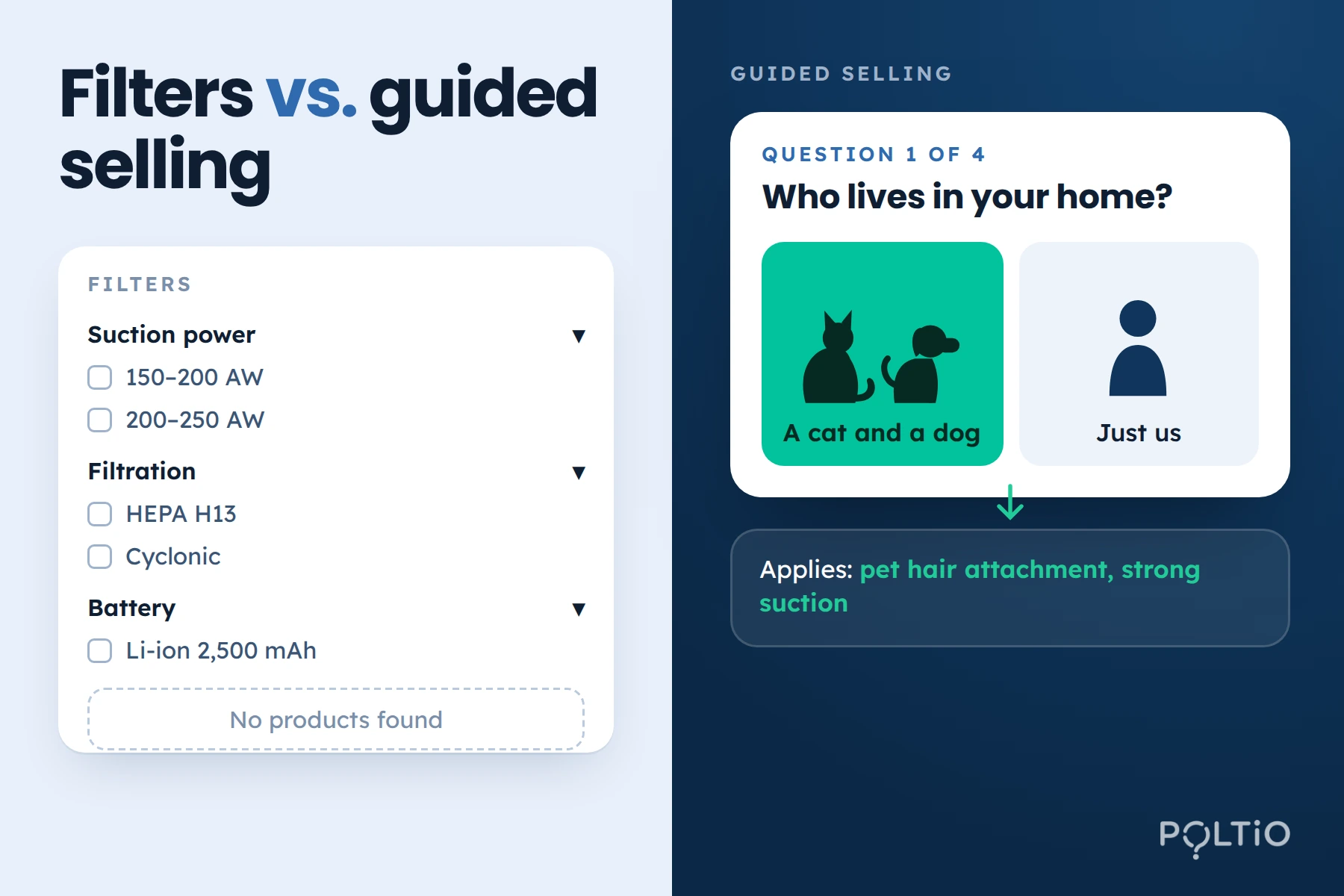
Filters assume shoppers know the specs. Most don’t. They know the problem.
A parent buying a first car seat doesn’t know whether they need i-Size, ISOFIX or a 360° base. They know their child’s age, their car and that they want it to be safe. Filters ask the first set of questions. Guided selling asks the second.
The short answer: Product filters (also called faceted navigation) let shoppers narrow a product list by choosing attributes such as size, brand, price or technical specifications. Guided selling asks shoppers plain-language questions about their needs and translates the answers into those attributes for them. Filters work for shoppers who know what they want; guided selling works for shoppers who don’t.
How do product filters work, and where do they fail?
Product filters let shoppers narrow a category by ticking attributes in a sidebar or top bar: brand, price range, size, color, capacity, rating. They’re fast and precise when the shopper speaks the catalog’s language. They struggle in four common situations:
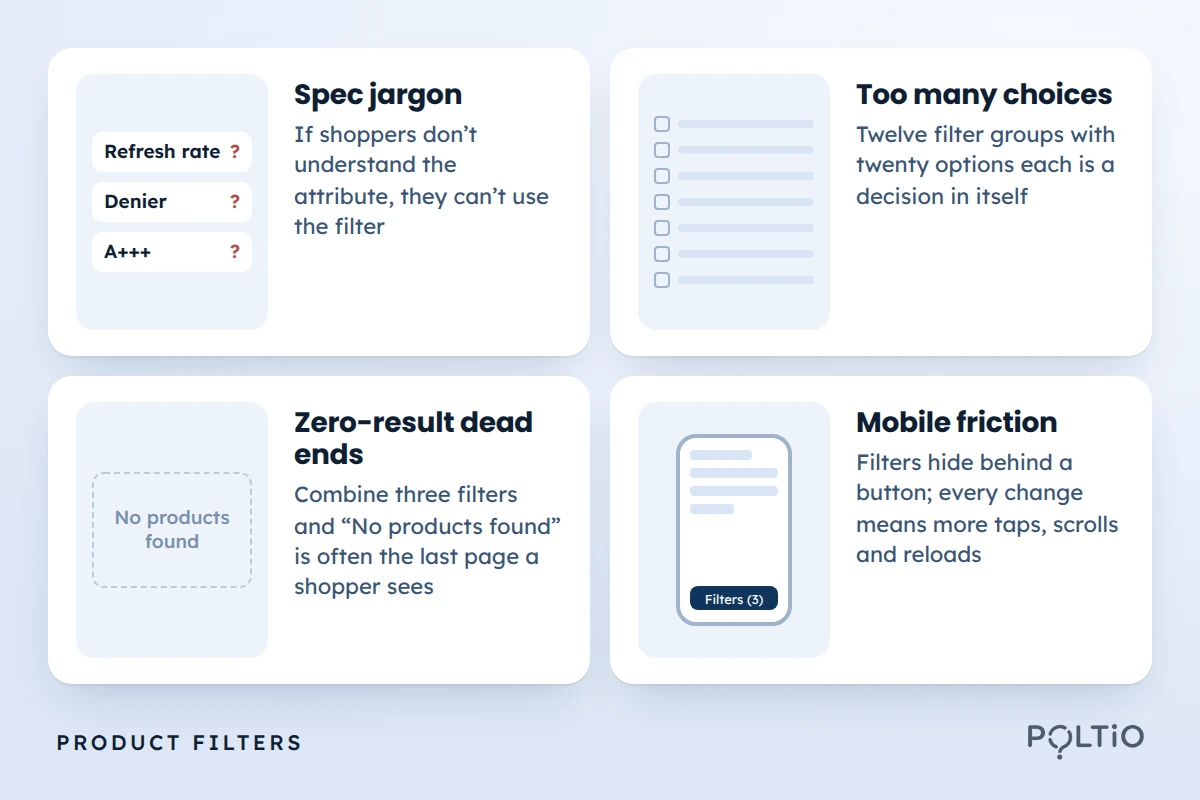
Filters also don’t explain anything. A shopper who filters to eight vacuum cleaners still has to figure out which of the eight is right for them.
How does guided selling work?
Guided selling is a method of helping shoppers choose by asking them a few questions about their needs and recommending the products that match. Instead of asking the shopper to pick attributes, it asks about their life and does the translation itself.
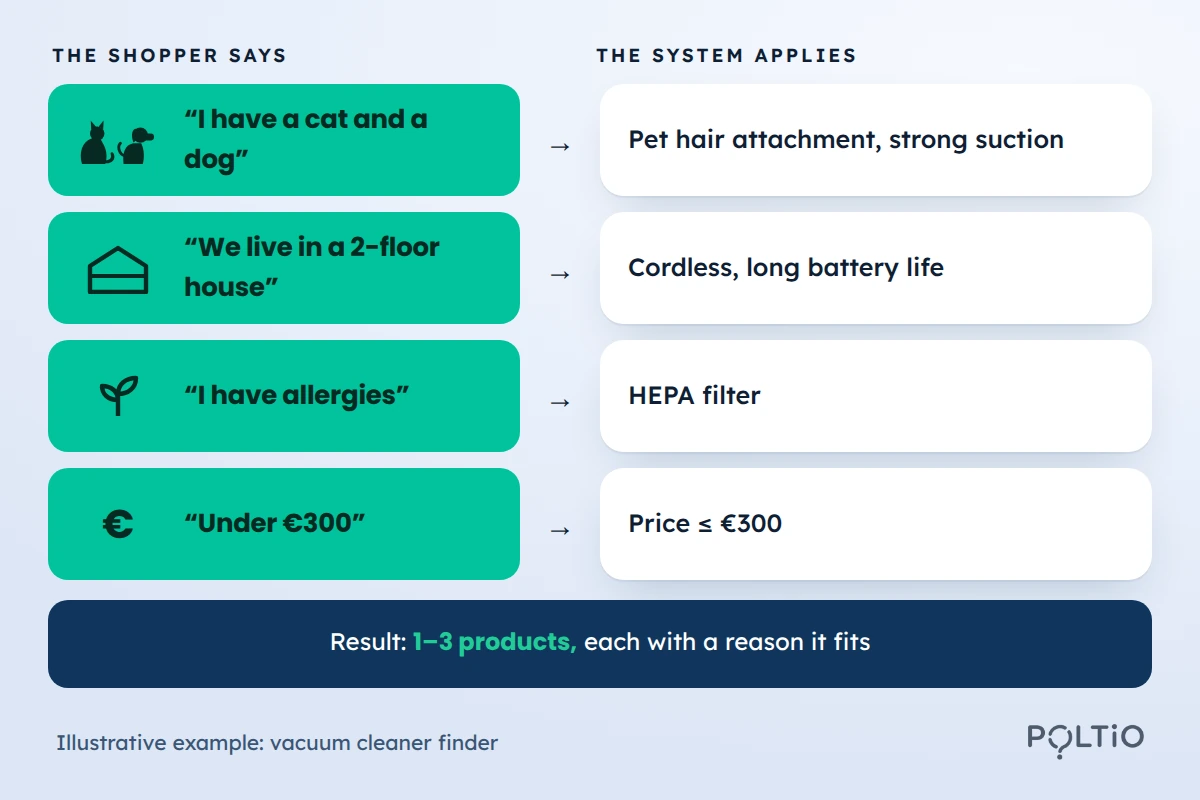
The result is a short list, usually one to three products, each with a reason it fits. The shopper gets an answer, not homework.
Guided selling vs. filters: side by side


Example: buying a camera both ways
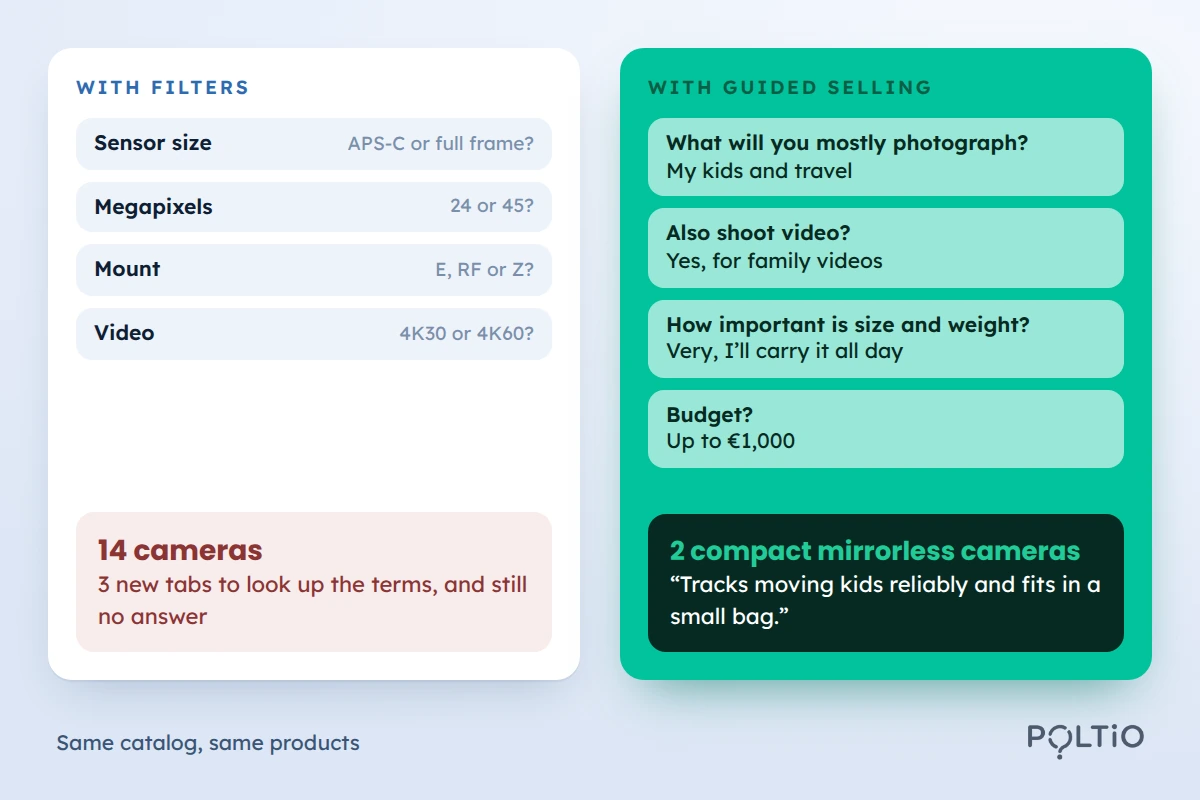
With filters: Sensor size → APS-C or full frame? Megapixels → 24 or 45? Mount → E, RF or Z? Video → 4K30 or 4K60? The shopper opens three new tabs to look up what these mean, ends up with 14 cameras and still doesn’t know which to buy.
With guided selling:
- What will you mostly photograph? → My kids and travel
- Do you also want to shoot video? → Yes, for family videos
- How important is size and weight? → Very, I’ll carry it all day
- What’s your budget? → Up to €1,000
Result: Two compact mirrorless cameras with fast autofocus, each with a note: “Tracks moving kids reliably and fits in a small bag.” Same catalog. Same products. One journey ends in a purchase; the other ends in a comparison spreadsheet.
Should you replace filters with guided selling?
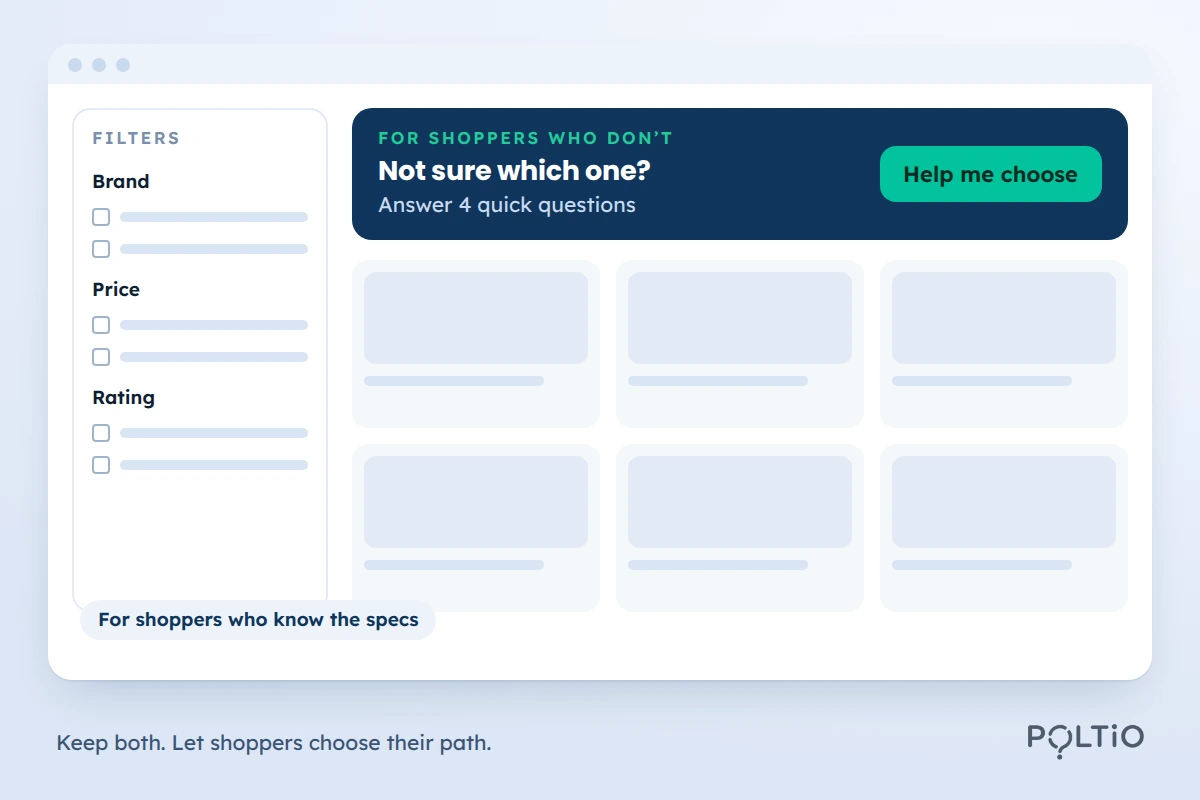
No. Keep both. Filters serve shoppers who know exactly what they want; guided selling serves those who don’t. Removing filters would frustrate experts; relying on filters alone loses everyone else. Use this framework to decide where guided selling should lead:
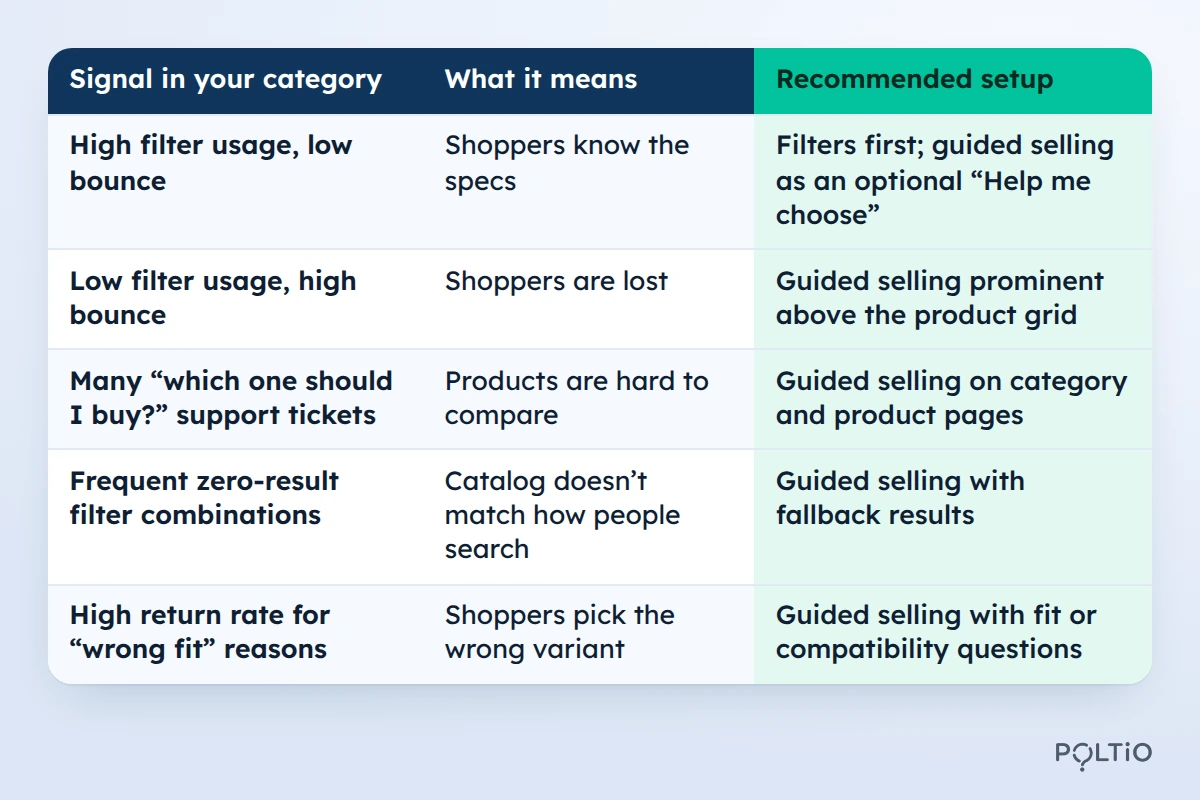
Best practice: Add a clear entry point above your category grid (“Not sure which one? Answer 4 quick questions”) and keep filters available alongside it. Let shoppers choose their path. When shoppers do take the guided path, the difference shows up in results: across Poltio customers, shoppers in guided funnels convert 66% better than the site average (usepoltio.com).
Frequently asked questions
What is guided shopping?
Guided shopping is an online shopping experience where the store asks shoppers questions about their needs and recommends matching products, like a salesperson would. It’s another name for guided selling, viewed from the shopper’s side.
Are product filters bad for UX?
No, filters are essential for shoppers who know what they want. They become a problem when they’re the only way to narrow a complex catalog, because many shoppers don’t understand the attributes.
What is faceted search?
Faceted search (or faceted navigation) is the filtering system on category and search pages that lets shoppers narrow results by multiple attributes at once, like brand, size and price.
Can guided selling and filters use the same product data?
Yes. Both rely on product attributes. Guided selling adds a layer that maps plain-language answers to those attributes, which is why clean, enriched product data improves both.
Give lost shoppers a better path than a filter sidebar. Book a Poltio demo or try the demo store.
Related reading: What Is a Guided Selling Platform? · Ecommerce Site Search vs. Intent-Driven Guided Commerce · Why Product Data Enrichment Matters