
Zero-Party Data Strategy: How to Collect and Use It for Ecommerce Personalization
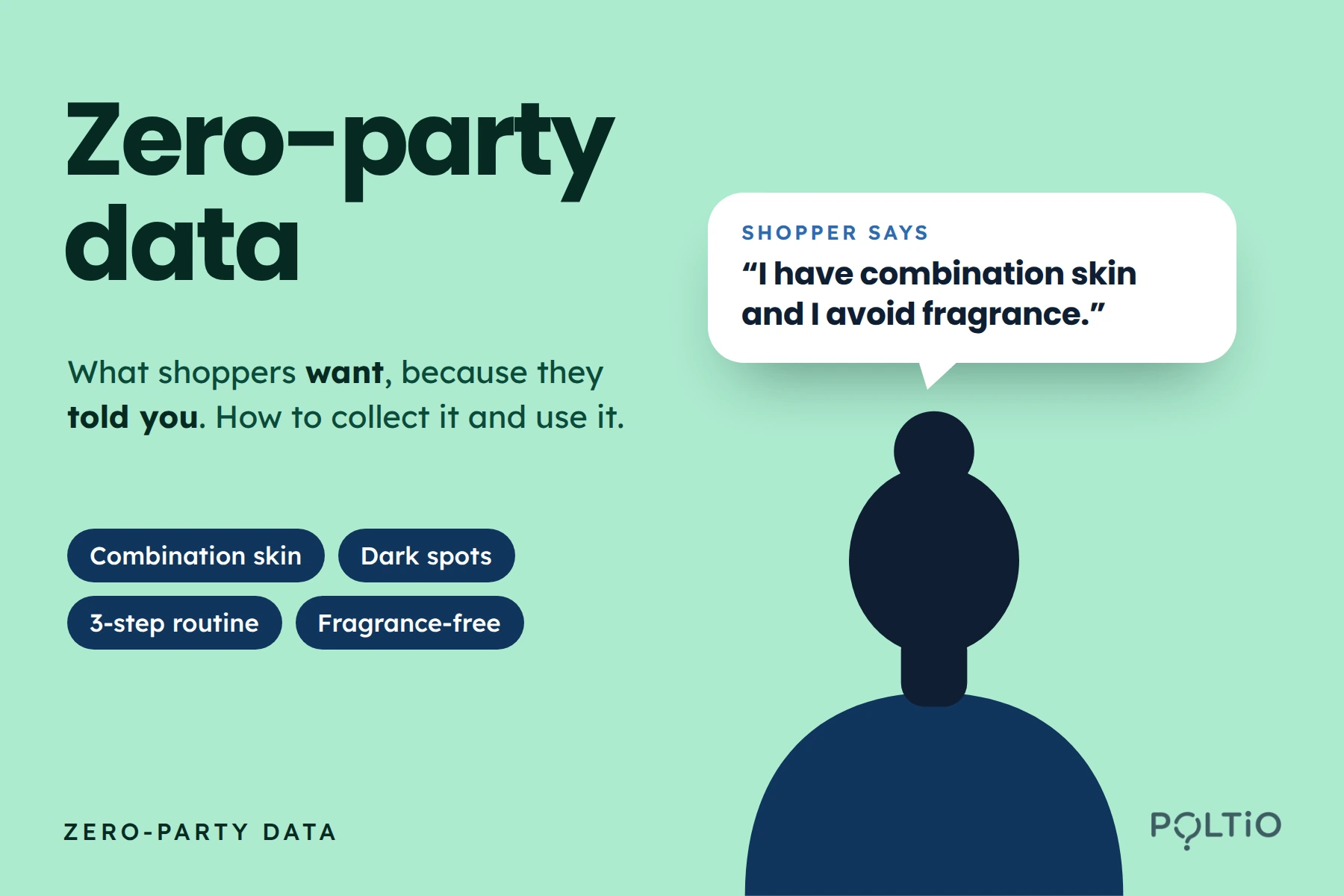
Third-party cookies are fading. First-party data only tells you what shoppers did. Zero-party data tells you what they want, because they told you. That difference is becoming a competitive advantage. As tracking signals shrink and ad costs rise, brands that know their customers’ needs, preferences and plans in the customers’ own words can personalize without guessing, and without the privacy risk of tracking.
Quick answer: Zero-party data is information a customer intentionally and proactively shares with a brand, such as preferences, needs, purchase intentions and how they want to be recognized. The term was coined by Forrester in 2018. Ecommerce brands collect it through product quizzes, product finders, preference centers, polls and surveys, and use it to personalize product recommendations, email, ads and on-site experiences.
Key takeaways
- Zero-party data is given, not tracked, which makes it the most accurate and consent-friendly customer data.
- The best collection method is one that gives shoppers something useful in return, like a product recommendation.
- Data is only valuable if it’s used: plan the segments and campaigns before you collect a single answer.
What is zero-party data? An example
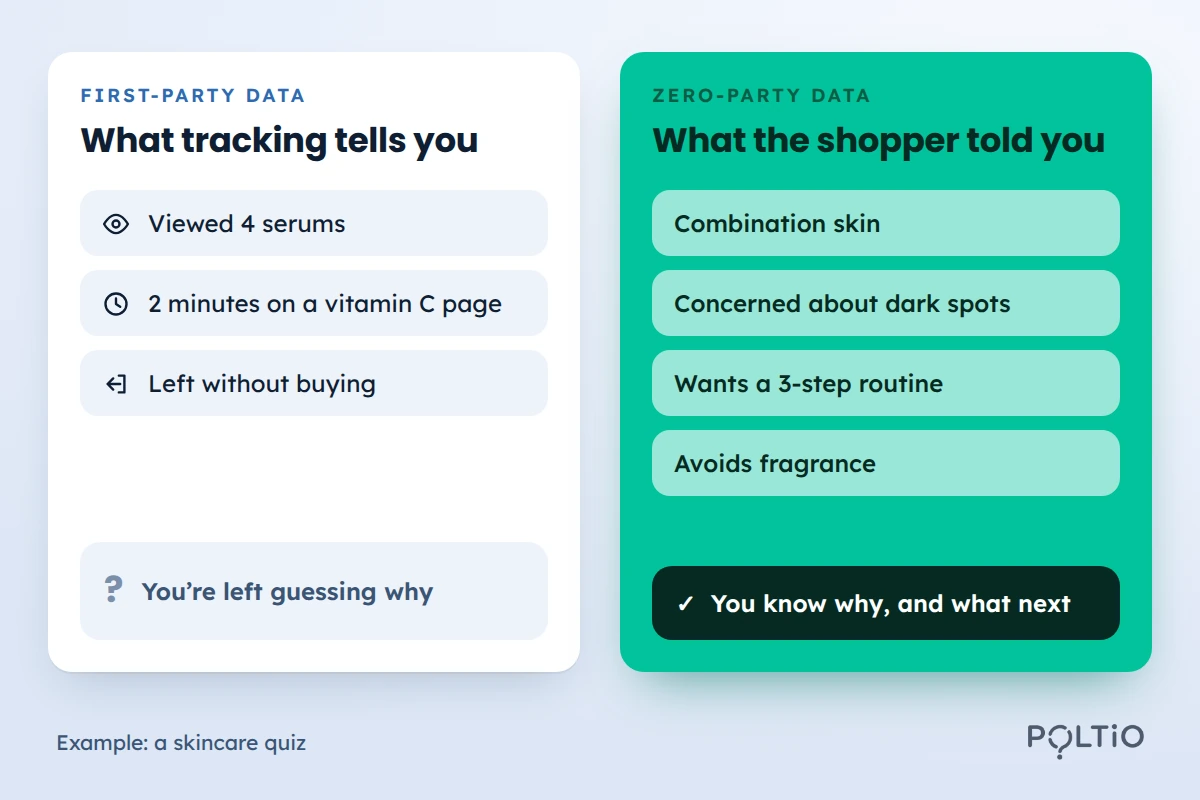
A shopper takes a skincare quiz and answers: combination skin, concerned about dark spots, wants a 3-step routine, avoids fragrance. Every one of those answers is zero-party data. The shopper chose to share it, knows they shared it, and expects it to be used to help them. Compare that with what tracking would tell you: viewed 4 serums, spent 2 minutes on a vitamin C product page, left without buying. Useful, but you’re left guessing why.
Zero-party vs. first-party vs. third-party data
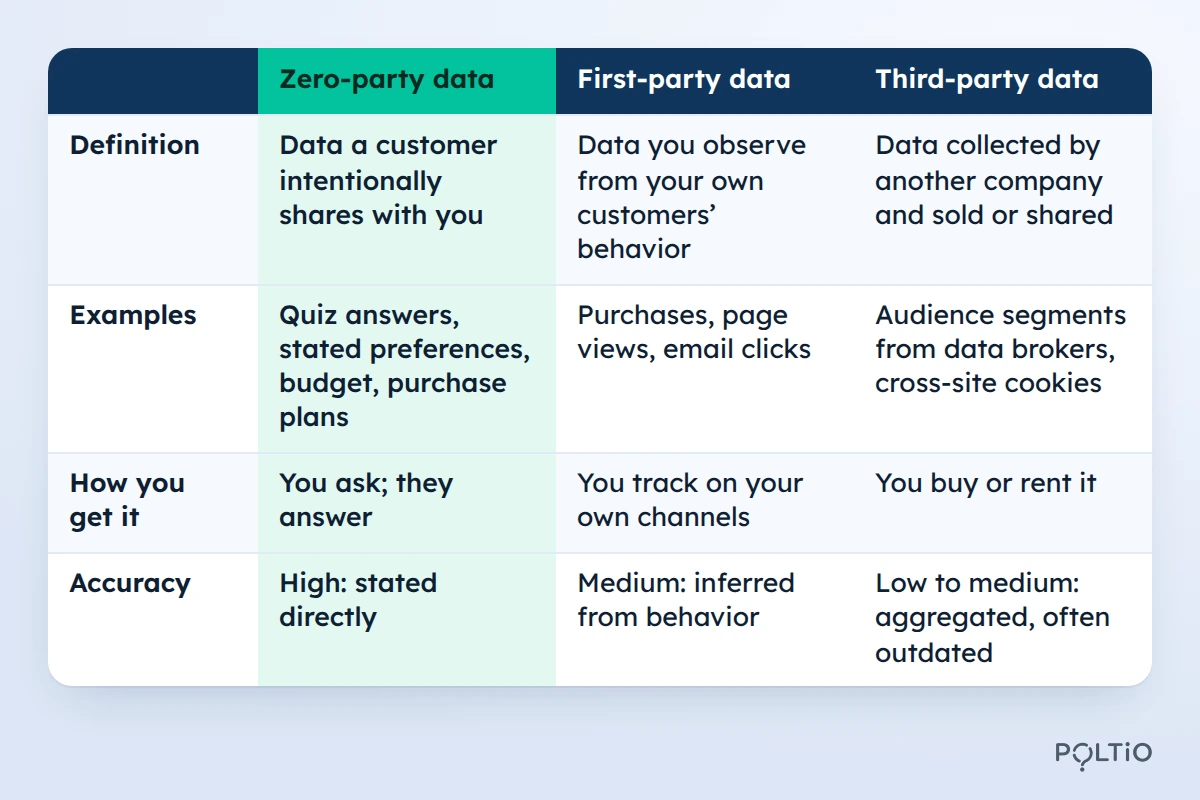
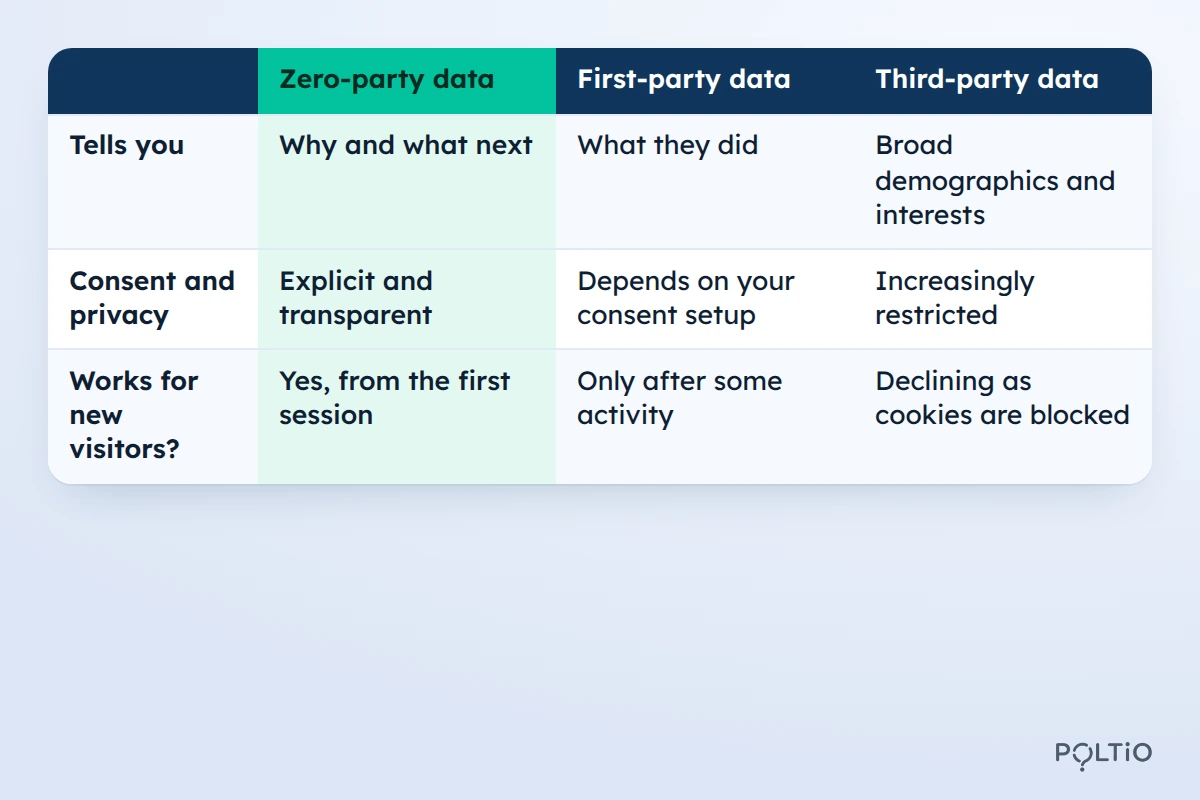
Zero-party and first-party data work best together: zero-party explains intent, first-party confirms behavior.
Why zero-party data matters now
- Tracking is less reliable. Safari and Firefox block third-party cookies by default, and consent requirements under rules like GDPR and KVKK mean many visitors are never tracked at all.
- Customers expect personalization. According to McKinsey, 71% of consumers expect personalized interactions and 76% are frustrated when they don’t get them.
- AI needs good inputs. AI-driven personalization is only as good as its data. Stated preferences are cleaner training signals than inferred ones.
- Acquisition is expensive. When each new visitor costs more, knowing what they want on the first visit matters more.
6 ways to collect zero-party data in ecommerce
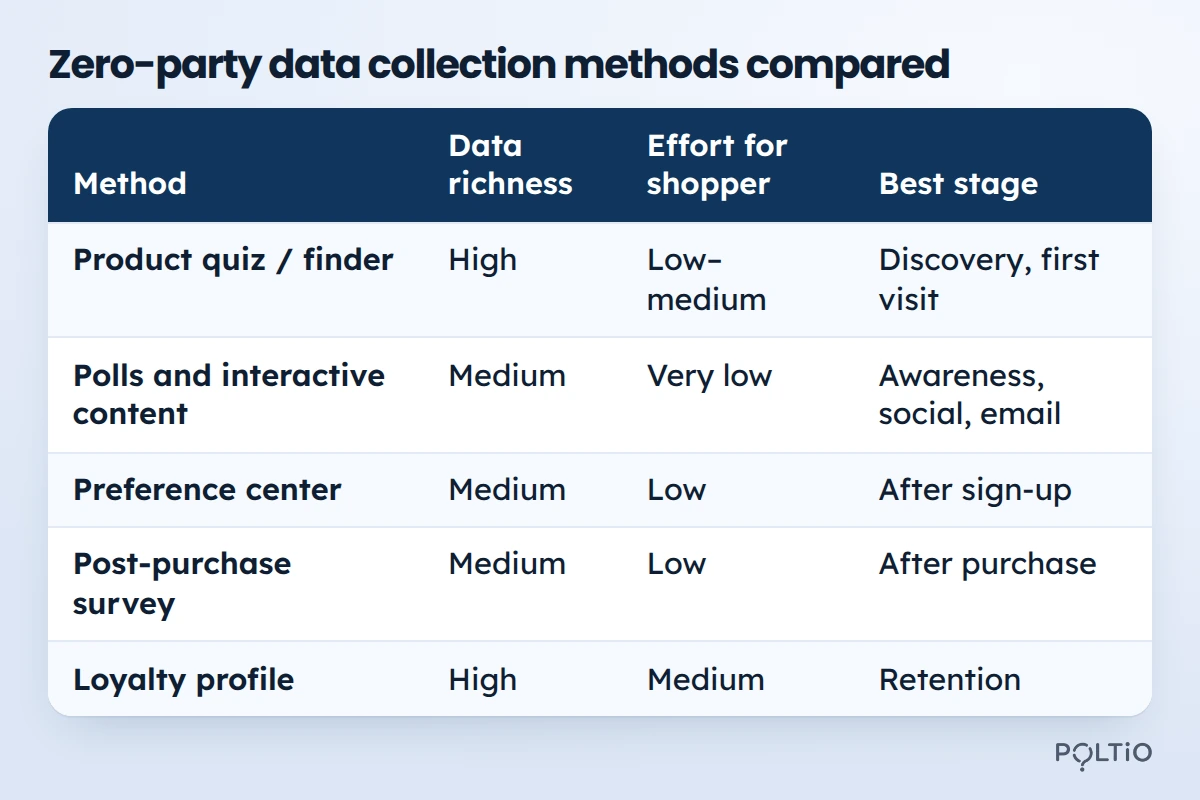
The rule behind every good method is the value exchange: shoppers share data when they get something useful straight away. The more immediate and personal the reward, the more (and more honest) data you collect.
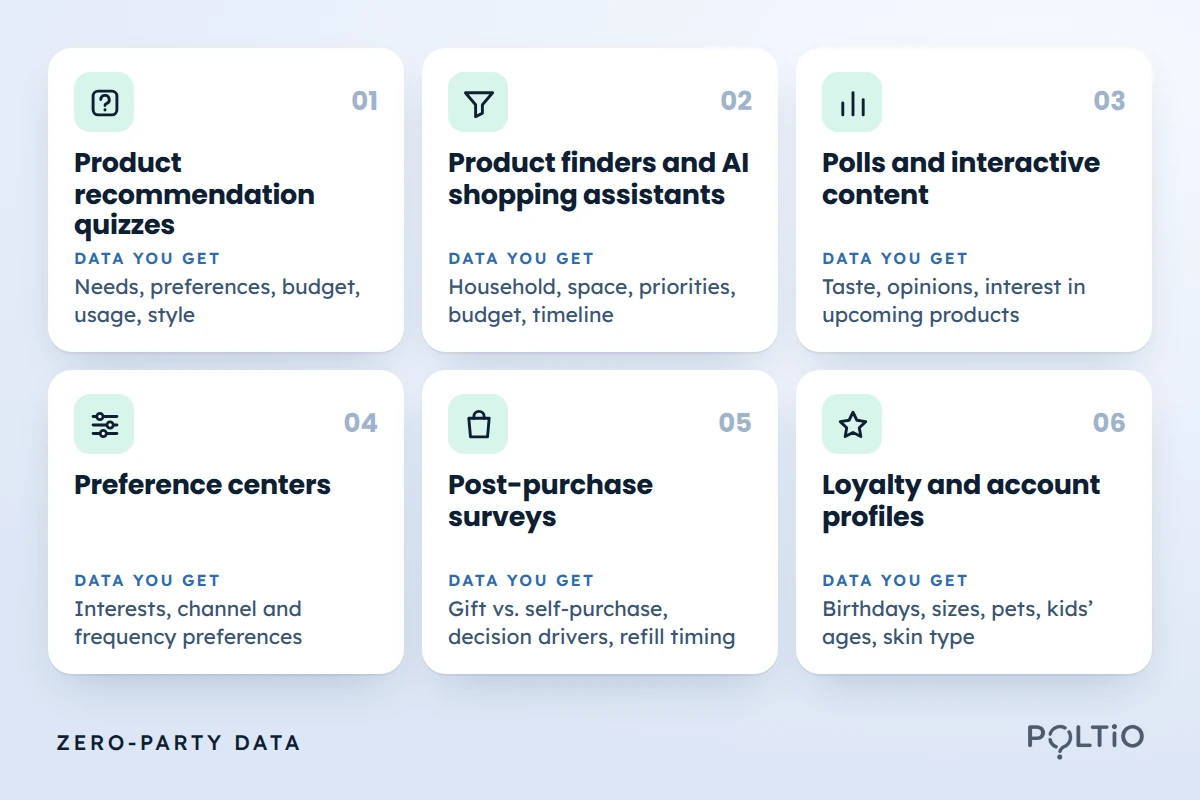
1. Product recommendation quizzes
A quiz asks about needs and preferences, then recommends products. The reward is instant and personal, which is why quizzes are one of the richest zero-party data sources.
Data you get: needs, preferences, budget, usage, style.
2. Product finders and AI shopping assistants
More functional than quizzes, finders help shoppers choose technical products, like appliances, electronics and sports gear. Every answer (“family of five”, “small kitchen”, “quiet operation matters”) becomes a profile attribute.
Data you get: household, space, priorities, budget, timeline.
3. Polls and interactive content
One-question polls, “this or that” votes and personality tests in social posts, emails or on-site. Low effort for the shopper and great for engagement.
Data you get: taste, opinions, interest in upcoming products.
4. Preference centers
Let subscribers choose topics, categories and email frequency. Less exciting, but essential for keeping zero-party data up to date.
Data you get: interests, channel and frequency preferences.
5. Post-purchase surveys
Ask right after purchase: “Who is this for?”, “What made you choose us?”, “When will you need a refill?”
Data you get: gift vs. self-purchase, decision drivers, replenishment timing.
6. Loyalty and account profiles
Invite members to add birthdays, sizes, pets, kids’ ages or skin type in exchange for perks.
Data you get: life-stage details that power year-round personalization.
How to turn zero-party data into personalization
Collecting answers is the easy part. The value comes from using them in three places.
On-site
- Show the recommended products again on the homepage when the shopper returns.
- Re-rank category pages using stated preferences (fragrance-free first, wide fits first).
- Personalize banners and content: a runner sees running content, a hiker sees hiking gear.
Email and SMS
- Welcome flows by answer: a shopper who said “dry skin” gets a hydration routine series.
- Abandoned-quiz flows: shoppers who finished a quiz but didn’t buy get their results by email with a nudge.
- Replenishment timing: use stated usage (“2 coffees a day”) to time refill reminders.
Poltio reports up to 7x higher email click-through rates for its customers (usepoltio.com). Messages that reflect what shoppers said they want are simply more relevant to them.
Advertising
- Build custom audiences from answer segments and tailor creative to them.
- Exclude shoppers from ads for products they’ve said don’t fit them.
- Create lookalike audiences from your highest-value answer segments.
Sending zero-party data to your marketing stack
Zero-party data should never sit in a silo. Map each answer to a profile property in the systems your team already uses:
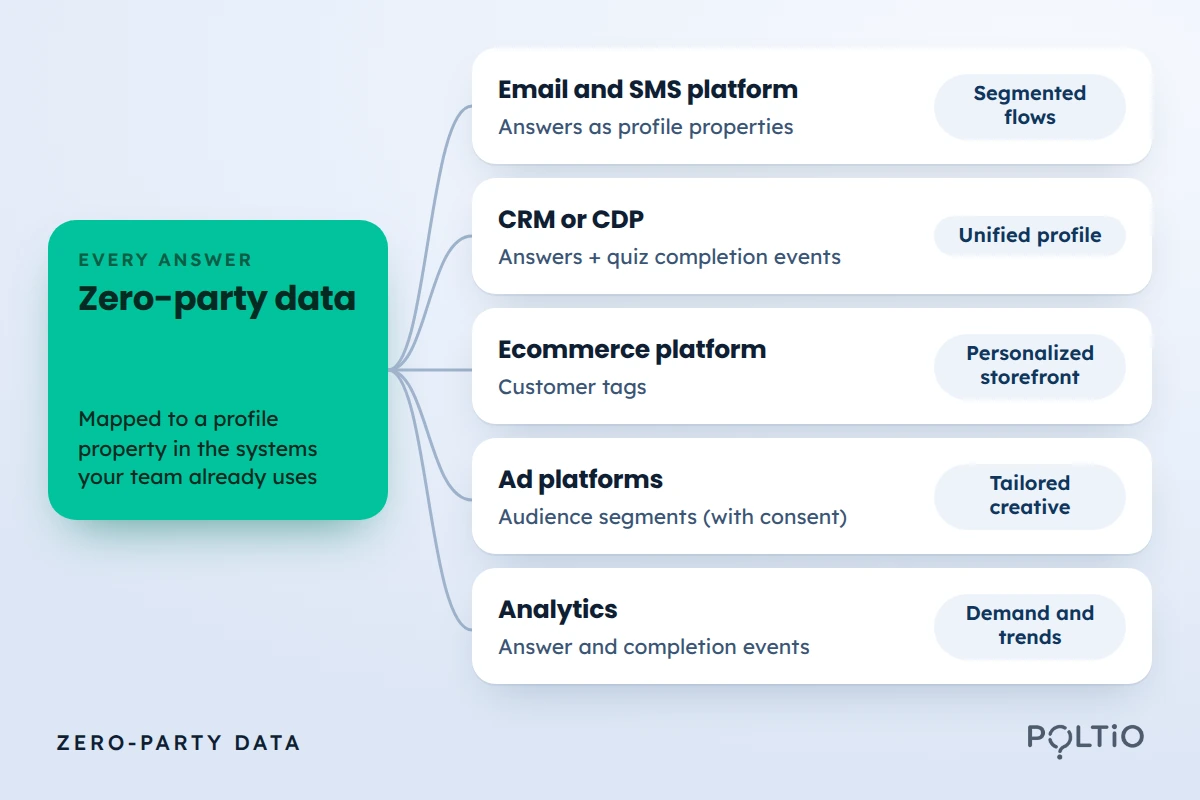
Poltio captures every answer, shows it in live dashboards and passes it to your CRM, so each quiz or product finder feeds your marketing stack automatically.
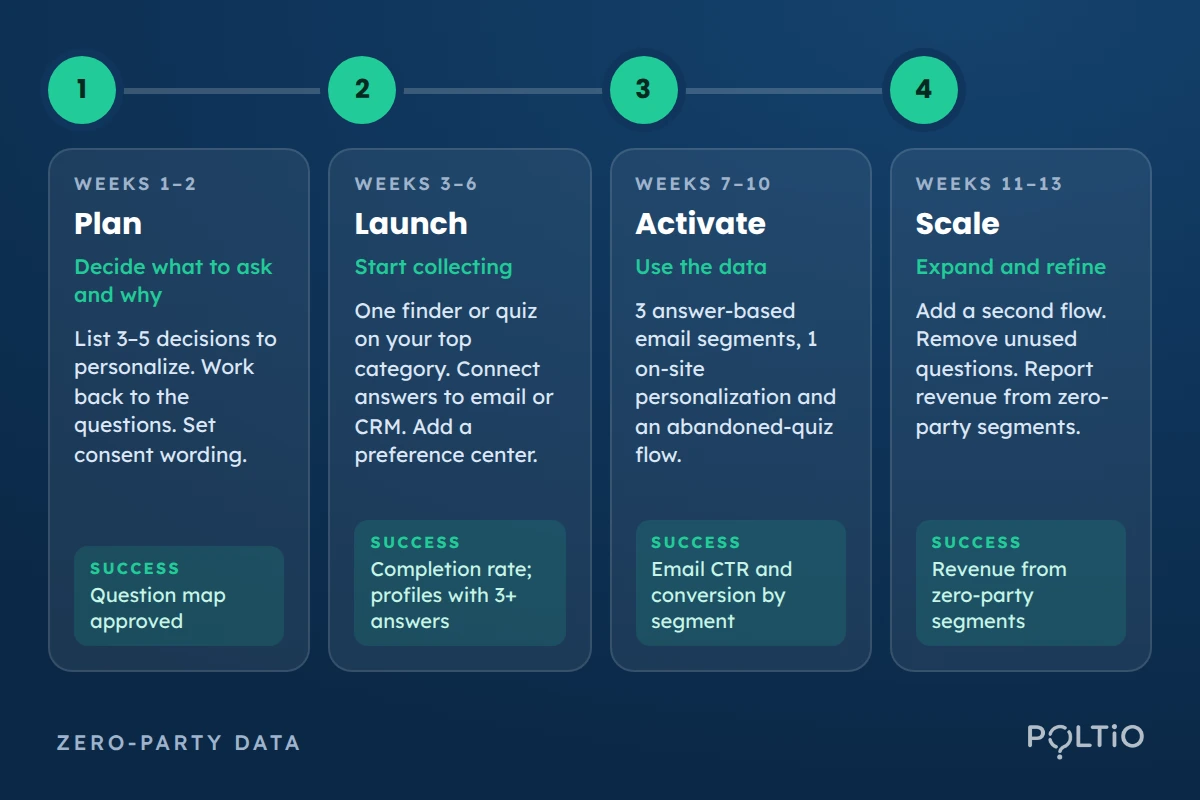
A 90-day zero-party data strategy template
Common zero-party data mistakes
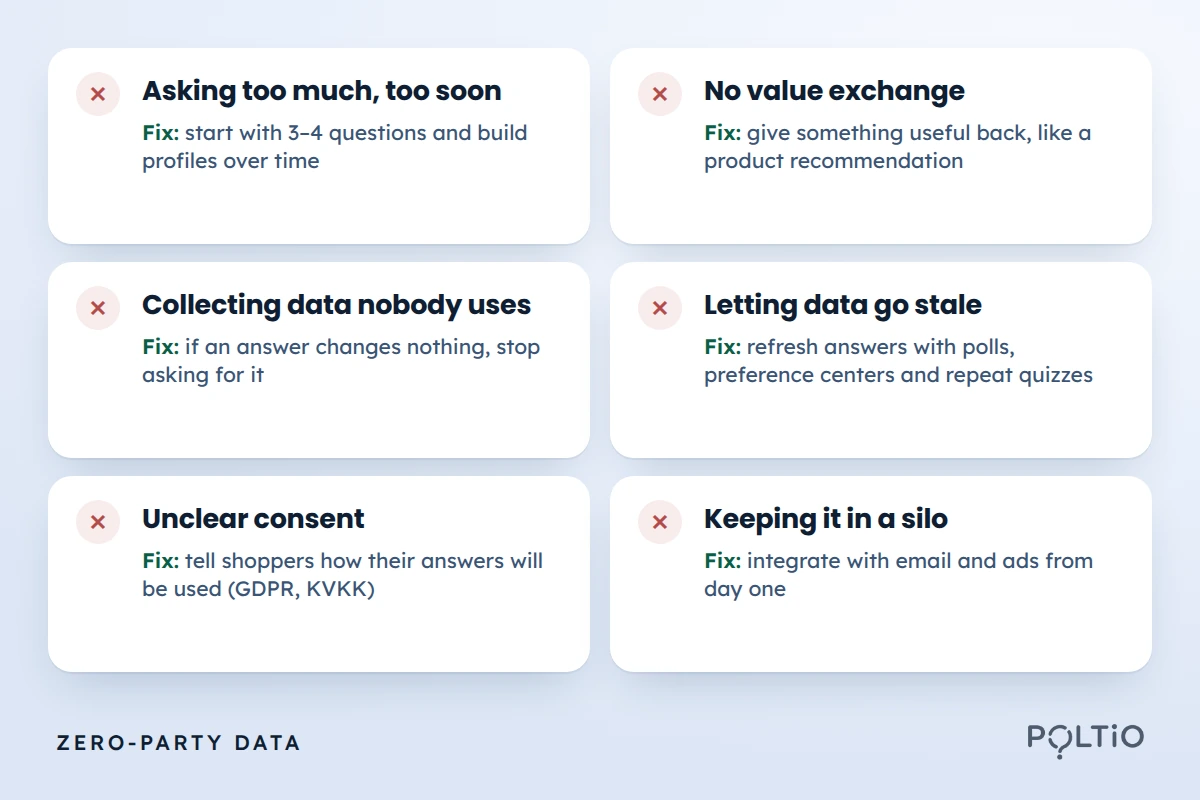
- Asking too much, too soon. Ten questions before any value loses most shoppers. Start with 3–4, and build profiles over time.
- No value exchange. “Tell us about yourself” with nothing in return gets low response and poor-quality answers.
- Collecting data nobody uses. If an answer doesn’t change a recommendation, email or ad, stop asking for it.
- Letting data go stale. Needs change. Refresh key answers with polls, preference centers and repeat quizzes.
- Unclear consent. Tell shoppers how their answers will be used. Transparency is what makes zero-party data trustworthy, and compliant with GDPR, KVKK and similar rules.
- Keeping it in a silo. Answers trapped inside a quiz tool can’t power email or ads. Integrate from day one.
Frequently asked questions
What is zero-party data?
Zero-party data is data that a customer intentionally and proactively shares with a brand, including preferences, purchase intentions, personal context and how they want to be recognized. The term was introduced by Forrester in 2018.
What is the difference between zero-party and first-party data?
Zero-party data is explicitly given by the customer (“I have sensitive skin”). First-party data is observed by the brand from the customer’s behavior on its own channels (“viewed three sensitive-skin products”). Both are owned by the brand; zero-party data is more explicit about intent.
Is zero-party data GDPR compliant?
Zero-party data can be collected in a GDPR-compliant way because the customer knowingly provides it. You still need a lawful basis, clear information on how it will be used and a way for customers to update or delete it. The same principles apply under KVKK in Turkey.
What are examples of zero-party data?
Quiz answers, product finder choices, preference center settings, poll votes, stated budgets, sizes, skin or hair types, gift recipients, birthdays and purchase timelines.
What’s the best way to collect zero-party data in ecommerce?
Product quizzes and product finders are among the most effective because shoppers get an immediate, personal reward (the right product) for their answers.
How do I use zero-party data for personalization?
Send answers to your email platform and CRM as profile properties, then build segments for email flows, on-site recommendations and ad audiences based on what customers told you.
Start collecting zero-party data shoppers are happy to give. Book a Poltio demo to launch a product finder that recommends the right products and feeds your CRM, or try the demo store.
Related reading: What Is a Product Recommendation Quiz? · Personalized Product Recommendations · Preparing Your Store for BFCM
Sources
- McKinsey: The value of getting personalization right—or wrong—is multiplying
- Poltio: customer results
- Forrester, “Zero-party data” definition (2018). Editor: add link to the Forrester source.